The U.S. Department of Agriculture (USDA) has confirmed cases of the pseudorabies virus in swine herds in Iowa and Texas. USDA’s Animal and Plant Health Inspection Service (APHIS) made the announcement on April 30.
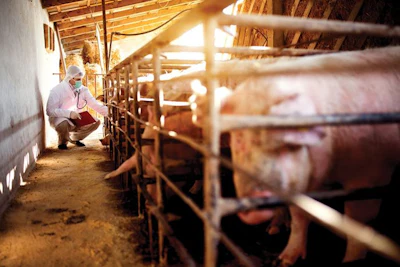
The small Iowa commercial swine herd of less than 100 hogs received five boars from the Texas herd several months ago, the Iowa Department of Agriculture and Land Stewardship (IDALS) reported.
The Texas herd was housed outdoors, allowing potential contact with feral swine. Pseudorabies was eliminated from U.S. commercial swine herds in 2004, but the virus is still found in wild or feral swine populations, creating a risk of exposure for domestic pigs.
The Iowa herd was depopulated last week in response to the outbreak. Herd testing showed no spread from the five infected animals to the rest of the herd, suggesting the outbreak is isolated and contained, officials said.
“Based on the confirmation of the pseudorabies virus in a small commercial swine herd in Iowa, we are moving decisively to eliminate the disease,” said Iowa Secretary of Agriculture Mike Naig.
There are pseudorabies vaccines for pigs, but IDALS said it isn't necessary to institute mandatory vaccinations at this time.
The U.S. Meat Export Federation said it doesn’t expect exports to be affected but is monitoring the situation.
This detection does not pose a risk to consumer health or affect the safety of the commercial pork supply. There may be limited, short-term impacts on exports of U.S. swine and/or swine genetics. Pseudorabies is a contagious viral disease of livestock and other mammals. However, pigs are the only natural hosts. While pseudorabies virus can infect most mammals, humans, horses and birds are considered resistant.
APHIS’ National Veterinary Services Laboratories (NVSL) confirmed via ELISA (enzyme-linked immunosorbent assay) and latex agglutination testing (LAT) a detection of antibodies to pseudorabies virus (PRV) in the herd. This confirmation was a result of routine testing, not pre-movement surveillance.