Energy use is one of the most practical areas where food manufacturers can turn sustainability commitments into measurable operational change. Boiler and steam systems are essential to food processing, but they also offer opportunities to reduce fuel consumption and greenhouse gas emissions. The next step is to combine engineering improvements with better use of operating data, allowing factories to identify losses, detect abnormal conditions and plan maintenance more precisely.
Charoen Pokphand Foods (CPF) and Bosch have signed a phase 2 memorandum of understanding, extending their partnership for another two years. The collaboration links CPF’s experience in food production with Bosch’s engineering, thermal technology and energy-management capabilities.
Using data to improve energy decisions
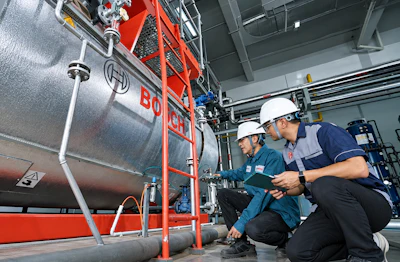
Phase 1 focused on improving boiler systems and studying options for replacing fossil fuels with cleaner energy sources. The work helped reduce fuel costs and greenhouse gas emissions, while the pilot project achieved an energy efficiency rate of more than 97%.
Phase 2 expands the scope from equipment and fuel to digital energy management. Real-time machinery data will be connected and analyzed using digital technology and AI. This will help identify areas of high energy use, detect abnormalities and support maintenance planning. Using data from actual operations will also allow the companies to develop solutions suited to CPF’s production processes.
For food manufacturers, the environmental gains must be achieved without compromising product quality or safety. More precise energy management can support both goals by improving the reliability of production systems while reducing the resources and emissions associated with their operation.
Athapol Pecharaply, director of sustainability and environmental engineering at CPF, said CPF’s approach connects the production of safe, high-quality food that is good for body and mind with responsibility for society and the environment. He said turning these aims into practical results requires specialist partners and technologies designed for the conditions of food production.
“CPF has expertise in the food industry, while Bosch is a leader in boiler technology. Both companies have policies with a similar goal of reducing carbon emissions. This collaboration therefore brings together our expertise and technologies to reduce greenhouse gas emissions from food production. We hope it will provide an example that other industries can adapt to their operations,” Athapol said.
Clean heat and smarter steam systems
Sutham Katekaewklieng, country head of Bosch Industrial Heat at Robert Bosch Ltd., said the collaboration brings together Bosch’s expertise in advanced boiler system design, energy-efficiency technologies, clean-energy steam generation and integrated energy data management.
“Bosch combines its expertise in boiler system design with energy-efficiency technologies and clean-energy steam generation solutions to help improve energy performance across industrial facilities while reducing greenhouse gas emissions. Our solutions have already been deployed across a wide range of industries and countries worldwide, including within CPF’s operations,” Sutham said.
As part of the collaboration, CPF and Bosch have also been jointly exploring the feasibility of applying emerging technologies, including steam generation powered by solar electricity and hybrid steam systems that combine solar-generated electricity with biomethane. These approaches have the potential to increase the use of cleaner energy sources while further reducing greenhouse gas emissions from industrial steam generation.
“Another important area of our collaboration is the integration and management of energy data under a common framework. This can provide the foundation for a centralized smart energy management system and pave the way for the future application of industrial AI and predictive analytics, enabling energy performance to be analyzed and optimized more efficiently and effectively,” he added.
Building a practical pathway to lower-carbon production
The partnership reflects a broader transformation in industrial sustainability, where energy management is evolving beyond individual equipment upgrades toward more integrated and connected systems. By combining cleaner energy sources, efficient steam generation and standardized operational data, manufacturers can gain greater visibility into actual operating conditions and make more informed decisions to continuously improve energy performance.
CPF and Bosch will continue to implement, evaluate and refine these initiatives based on real-world operating data and performance. Through this collaboration, the companies aim to identify practical and scalable approaches to improving energy efficiency, reducing resource consumption and lowering greenhouse gas emissions, while supporting CPF’s long-term sustainability and net-zero ambitions.