European Union imports of phosphate rock from Russia reached 170 million euros ($190.2 million) from January through September 2026, up 17% from a year earlier and the highest level for the period since 2016, according to Ragn-Sells.
The Swedish environmental company released the figures Tuesday in an analysis of trade data from the European Commission. Russia supplied 38% of the value of EU phosphate rock imports during the period, making it the bloc's largest supplier. Morocco ranked second at 137 million euros ($153.3 million), followed by South Africa at 48 million euros ($53.7 million).
The numbers feed the company's EU Phosphorus Import Index, which draws on the commission's fertilizer trade dashboard and Eurostat customs data. Ragn-Sells said figures for the most recent months are preliminary and may be revised. Its first-half analysis, released July 22, put Russian phosphate rock imports at 105 million euros ($117.5 million) and Russia's share of EU phosphate import spending at 34%.
That matters for feed. Phosphorus is a key nutrient in both mineral fertilizers and animal feed, and the EU lists it as a critical raw material. Nearly all phosphorus used in European agriculture is imported, because the EU's only active phosphate mine, in Finland, supplies less than 10% of agricultural demand.
Pär Larshans, chief sustainability officer at Ragn-Sells Group, said the trend has run against Europe's own goals since 2022.
"Since Russia's full-scale invasion of Ukraine in 2022, the value of EU imports of Russian phosphate rock has increased rather than declined. That is a striking development at a time when Europe is trying to reduce its dependence on imported critical raw materials," Larshans said.
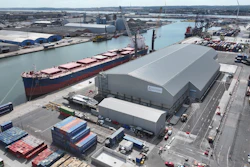
Ragn-Sells has a commercial stake in the alternative. Its subsidiary EasyMining developed Ash2Phos, a process that recovers high-purity phosphorus from sewage sludge ash, and the first large-scale Ash2Phos plant is under construction in Schkopau, Germany. EU rules currently prevent phosphorus recovered from wastewater from being used in animal feed, which the company said works against investment and scale-up. Jonas Hagman, CEO of EasyMining, said the gap is regulatory, not technical.
"Europe has the technology to turn phosphorus from wastewater into a valuable raw material. What is missing is a regulatory framework that allows circular phosphorus to compete on equal terms with mined phosphorus," Hagman said.
Ragn-Sells did not report import volumes for the nine-month period, and it did not name the specific EU feed rule it wants changed. The company also did not give a start date for the Schkopau plant.