.jpg?auto=format%2Ccompress&crop=faces&fit=crop&h=48&q=70&w=48)
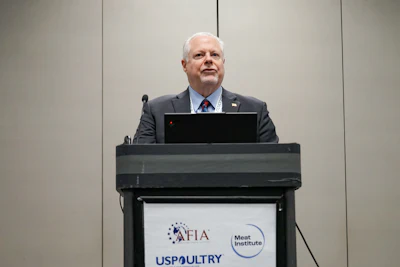
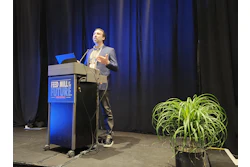
Innovations in animal feed are reshaping sustainable production by enhancing efficiency, animal well-being, and environmental responsibility, according to Dr. Steve Lerner, senior scientist and business advisor at Novonesis, at the Animal Agriculture Sustainability Summit at the International Production & Processing Expo (IPPE). The focus on feed ingredients as a key driver of sustainability is gaining traction in the livestock industry, where feed accounts for up to 80% of the production footprint.
Lerner emphasized the “sustainability equation,” balancing productivity, profitability, and responsibility. He noted that improving feed efficiency not only increases profitability for producers but also significantly reduces environmental impacts such as greenhouse gas emissions, water use, and land requirements. “Small gains in efficiency provide large returns for the environment,” he said.
Central to these advances is the understanding of the animal gut as a complex bioreactor hosting trillions of microorganisms essential for nutrient absorption and overall health. Feed innovations now target supporting this microbiota to improve digestion, immune function, and energy balance. This holistic approach benefits both animal welfare and production outcomes.
The evolution of feed additives has moved from reactive antibiotics in the 1960s to probiotics, postbiotics, and now digital-linked ingredients that integrate with life cycle assessment (LCA) models. These digital tools allow real-time quantification of environmental benefits, such as reductions in phosphate mining and CO2 emissions, tied directly to ingredient choices.
One case study involving 1.2 million broilers demonstrated that effective probiotics significantly reduced feed conversion ratios and mortality rates, leading to lower nitrogen waste and a smaller environmental footprint. Enzyme technologies also enhance nutrient availability, increasing energy yield from feed and improving growth performance.
Lerner also highlighted the substantial impact of feed innovation on global sustainability goals. For example, a mere 0.25% improvement in feed efficiency could save 3.5 million metric tons of feed, spare 700,000 hectares of cropland, and avoid up to 2.5 million metric tons of CO2 emissions annually. Feed-related interventions account for roughly 60% of measurable improvements in greenhouse gas reductions across the animal production lifecycle.
The integration of multi-strain microbial consortia, complementary enzyme systems, and precision feed additives represents the next frontier in feed innovation. These advances, combined with transparent LCA data and digital dashboards, empower nutritionists and producers to optimize formulations and demonstrate sustainability gains to retailers and consumers.
Lerner stressed that sustainability adoption depends on profitability and producer confidence. “Few producers will adopt sustainable practices if they cost money without benefit,” he said. However, when innovations improve efficiency, animal health, and environmental outcomes simultaneously, the result is a “triple win” scenario.
Collaboration across the supply chain—from ingredient suppliers to nutritionists, producers, retailers, and consumers—is critical to accelerating adoption. Transparent, standardized sustainability metrics build trust and enable market differentiation, creating incentives for producers to embrace innovative feed solutions.
Ultimately, Lerner urged a mindset shift away from viewing sustainability as regulatory compliance toward seeing it as a driver of performance and profitability. “When you feed animals more efficiently, we sustain this land more effectively,” he concluded.
As the livestock industry faces growing demand for animal protein alongside environmental challenges, feed innovations offer a practical path to meet both goals. By improving biological efficiency and leveraging cutting-edge science, producers can enhance profitability while reducing their environmental footprint—ensuring sustainable production for generations to come.