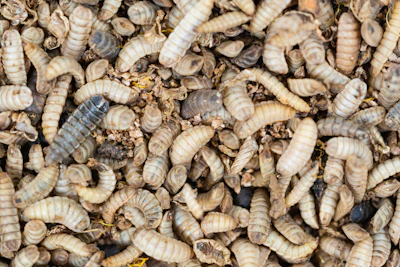
Bioflytech is developing, in collaboration with the University of Santiago de Compostela (USC) and through its subsidiary Alfaprogal (Alternative Fats and Proteins of Galicia), a pioneering system to monitor humidity control in its biorefinery in Palas de Rei (Lugo), one of the determining variables in the fattening process of black soldier fly (BSF) cultures and fundamental for its survival and growth.
The project, led by the USC’s Proxectos e Planificación (PROePLA) research group, seeks, through the implementation of new artificial vision and sensor technologies, to establish a decision support model, replicable to other factories, that allows the automation of the process to increase production with greater efficiency and sustainability.
“This is a complex and novel study due to the type of biomass Bioflytech works with. Since they are living organisms, the larval fattening process is influenced by a multitude of variables. These range from their handling, temperature, and the type and supply of feed and water to their distribution. In this phase, we focus on monitoring the decision-making process related to the humidity of the culture,” said Tomás Cuesta and Jorge Dafonte, principal investigators of the project.
Furthermore, “black soldier fly larvae have a very short growth cycle, so measures must be taken and action taken very quickly. If there is too little water, the larvae die, and if there is too much, they stop developing, so it is necessary to achieve the perfect humidity level,” Cuesta said.
Added to this is the small size of the larvae, which makes monitoring and operations even more difficult.
“Our goal is to find an easily identifiable parameter that can serve as a reference for making crop irrigation decisions based on a common pattern,” Cuesta said.
To achieve this, Bioflytech’s facilities have been equipped with thermometers to measure ambient temperature and the temperature and humidity within the crop, along with sensors and artificial vision technology that collect hourly data on the crops. Through machine learning programs, the information obtained is cross-referenced with decision-making data, enabling the standardization of irrigation control during the fattening process and the stabilization of the insect biorefinery model for obtaining high-quality fats, proteins and fertilizer.
The alliance with USC allows Bioflytech to intensify its R&D plans, leveraging the experience, scientific equipment, and research excellence of the academic institution.
“For our company, having the scientific backing and rigor of USC is a fundamental step in consolidating ourselves as a competitive, innovative and forward-thinking company, with a strategic livestock model that is an alternative to the traditional one, more sustainable and technologically advanced, and with great growth potential,” said Jesús Rodríguez, CEO of Bioflytech.
The project, which is expected to yield its first results next October, is funded by the IGAPE Innova program, aimed at improving the innovation capacity of Galician companies.