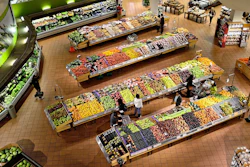
Price increases across most food and beverage categories are tightening household budgets and prompting consumers to make wholesale changes in how they shop. A growing number of Americans are trading down to lower-cost food options, reducing discretionary purchases or buying fewer groceries altogether.
According to a new quarterly report from CoBank’s Knowledge Exchange, inflationary pressures and shifting consumer buying patterns are rippling through the U.S. food chain, reshaping strategies for retailers, manufacturers and suppliers.
“While May’s increase in the food price index was tepid, overall food prices are up 2.7% from May 2025 and roughly 26% higher than five years ago,” said Billy Roberts, food and beverage economist with CoBank. “Cumulatively, food price increases are proving to be the definitive, everyday stressor for consumers and they’re responding decisively by choosing lower cost options like private label brands, shopping at discount retailers or simply buying less.”
The change in consumer behavior hasn’t gone unnoticed by manufacturers and retailers. Large grocery retail chains are unveiling price rollbacks and value positioning to maintain traffic and protect market share. Meanwhile, food and beverage manufacturers are emphasizing affordability through pricing adjustments, promotions and productivity gains aimed at offsetting rising input costs.
According to market research firm Numerator, 4 out of 10 consumers cite rising prices as their top concern for the year ahead. Cost pressures building across everyday goods are straining some demographics more than others, a disparity likely to persist while gas and energy prices remain elevated. Nonetheless, inflationary pressures, including those triggered by the war in Iran, are continuing to impact many sectors of the U.S. economy.
Animal protein and dairy
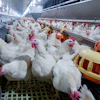
Animal protein markets are increasingly out of sync with shifting consumer purchasing. Demand remains resilient, but supply responses vary sharply by species. Consumers are signaling a willingness to pay higher prices for beef despite limited supply, while lower-cost pork and chicken alternatives have not fully absorbed the available production. A cost-per-gram comparison may help explain the tension. If pork, chicken or eggs offer more affordable protein, the key question is why consumers are not shifting more aggressively toward those products. The answer likely reflects more than price alone, including taste, quality perceptions, meal preferences, convenience and food service menu dynamics.
The export market for U.S. dairy products continues to gain momentum with cheese and butter setting the pace. Through April, U.S. cheese exports totaled 523 million pounds, a 25% increase over the first four months of 2025. Butter and anhydrous milkfat exports during the same period totaled 134 million pounds, an 88% increase year-to-date. Cheese and butter have been extremely valuable as export products given the higher levels of butterfat in U.S. milk. Butterfat production has been improving so fast on U.S. dairy farms that some dairy processors have placed caps on butterfat levels for payment in milk checks.
Grains, farm supply and biofuels
Favorable growing conditions throughout the Corn Belt have eased concerns of a smaller corn harvest this fall. Barring any adverse weather, corn prices are likely to stay depressed into harvest season due to ample global supplies. Surging soybean oil prices have sent crush margins for processors to record highs and lifted the U.S. crush pace to breakneck speed. High diesel prices after the start of the Iran war have given biofuel feedstocks like soybean oil additional price support. Heavy rains after a historic drought thwarted the U.S. winter wheat harvest. The U.S. winter wheat crop is expected to be the smallest since 1965 with harvested acreage for all wheat figured to be the lowest since 1877.
Shrinking farmer margins may reduce the volume of crop inputs moving through agricultural retailers. With lower commodity prices projected in 2026, producers will be focused on protecting yields while limiting input spending. U.S. Department of Agriculture (USDA) projections show elevated production costs are becoming structural, with per-acre costs expected to remain elevated into 2027. Farm supply cooperatives and ag retailers should prepare for more cautious fertilizer and chemical buying, but they have opportunities to provide insights to farmers on how to maximize yields.
The EPA delivered an agriculture-friendly renewable volume obligation mandate in March, significantly increasing the volume of bio-based fuels required for U.S. gasoline and diesel. But the real test will be whether the refining industry can meet the ambitious targets. The RVO for 2026 and 2027 jumps 67% and 70%, respectively. This year’s level of blending will determine if the EPA can continue to take the RVO on an upward trajectory. Even as U.S. renewable diesel and biodiesel utilization improves, production remains below mandated levels.
US government
Agricultural issues have taken center stage in the halls of Congress and throughout the countryside in recent weeks. The USDA released its reorganization plan, New World screwworm has returned to the U.S. for the first time in 60 years, and debate on the farm bill is heating up. Three months ago, most of Washington failed to fully appreciate the strength of the agriculture community. But that dynamic changed when Midwestern members made demands on the farm bill and E15 in exchange for ending legislative logjams on other issues. The agricultural industry hopes for swift action on these and other key issues as the farm economy continues to deteriorate. Affordability issues are being discussed at every kitchen table in America, and many producers are concerned about their futures.