The USDA is investing $25 million to build a new sterile fly dispersal facility in Arizona as part of its long-term effort to suppress New World screwworm and support the reopening of livestock trade ports along the southern border with Mexico.
- USDA commits $25 million to construct a sterile fly dispersal facility in Arizona to control New World screwworm populations
- The facility will expand existing sterile fly production infrastructure already operating in Texas, Mexico, and Panama
- Construction could begin within several months once a site is selected by USDA and Arizona officials
- Douglas, Arizona Port of Entry will reopen to livestock trade on August 24, with rigorous veterinary inspections required for all incoming animals
- Trapping operations near Douglas tested nearly 1,000 flies over the past year with zero confirmed New World screwworm detections
The U.S. Department of Agriculture (USDA) is committing $25 million to build a new sterile fly dispersal facility in Arizona, Agriculture Secretary Brooke Rollins announced this week, expanding the federal government's long-term effort to suppress New World screwworm (NWS) along the southern border.
The facility would add to existing sterile fly production and dispersal infrastructure already operating in Texas, Mexico and Panama. USDA said it will work with Arizona officials to select a specific site, and that construction could take as little as several months depending on the location chosen.
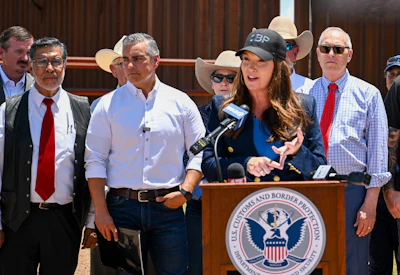
Rollins announced the investment during a visit to the Douglas, Arizona, Port of Entry, where USDA also confirmed plans to reopen the port to livestock trade on August 24. The reopening is part of a phased plan for southern livestock ports that USDA outlined last week, contingent on Mexico's continued compliance with a joint action plan targeting NWS.
Rollins was joined at the port by Reps. Juan Ciscomani, Andy Biggs and Eli Crane, along with Arizona Department of Agriculture Director Paul Brierley.
Douglas was chosen to reopen first because Sonora, the neighboring Mexican state, has one of Mexico's strongest animal health systems and is considered the lowest-risk state for the pest, USDA said. Under the reopening plan, every animal entering through Douglas will undergo multiple veterinary inspections, including inspection by USDA veterinarians. Animals that fail to meet import criteria set by USDA's Animal and Plant Health Inspection Service will be denied entry, and USDA said a confirmed NWS detection would immediately halt imports through the facility.
USDA and Arizona officials said trapping operations conducted near Douglas over the past year submitted nearly 1,000 flies for testing; none were identified as NWS.
USDA said it is also evaluating potential reopening of the Santa Teresa and Columbus, New Mexico, ports, but that decision will depend on the outcome at Douglas and continued risk assessment.
The department said both the port reopening and the broader response remain subject to change, adding that it will monitor conditions closely and can pause or adjust plans if the risk profile shifts.