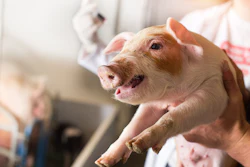
The Philippine Department of Agriculture (DA) is expanding its African swine fever (ASF) recovery drive by procuring 32,000 gilts, a government-backed swine repopulation push the agency said is a step in restoring hog inventories hit by the disease. The move matters now because it puts public procurement directly into the breeding pipeline, with the first effects concentrated on gilt suppliers, veterinarians and producers positioned to receive and manage new breeding stock.
The DA said it will roll out an expanded swine repopulation program that includes the procurement of 32,000 gilts, describing the move as part of measures “to restore the swine industry after ASF,” according to the Philippine News Agency. The intervention focuses on breeding-age female pigs, a lever that targets production capacity rather than short-term market balancing.
Implementation is being carried by the DA’s National Livestock Program, the agency unit identified as leading the initiative. By channeling the effort through the National Livestock Program, the DA is framing the repopulation expansion as a structured recovery measure rather than an ad hoc distribution effort.
The backdrop is ASF, which the DA cited directly in linking the program to recovery. The repopulation emphasis underscores a policy priority aimed at rebuilding herds after disease-driven losses, with government procurement intended to accelerate restocking at the breeding level.
For now, the single hard metric disclosed is scale: 32,000 gilts slated for procurement. That number becomes the immediate benchmark the industry will watch — how quickly those animals are acquired, where they are placed and how they translate into breeding throughput — as the DA ties the program to restoring the swine industry.
Key program details that typically determine execution and accountability were not included in the DA’s public description, including procurement budget, unit pricing, supplier identification, and the bidding or purchasing method. Also not specified were rollout timing, target provinces or beneficiaries, the distribution mechanism, eligibility requirements, and any biosecurity, quarantine or monitoring rules that would govern placement of the animals in farms recovering from ASF. The DA also did not cite baseline inventory levels, quantified losses or explicit recovery targets.
What comes next for producers and suppliers is the operational rollout: the mechanics that will determine how fast 32,000 gilts move from procurement to farms and how the National Livestock Program measures outcomes. With ASF recovery cited as the rationale, industry participants will be watching for execution details that define where the animals go, under what controls, and how the program’s scale translates into tangible herd rebuilding.