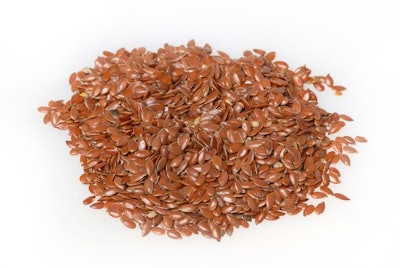
Linseed, or flaxseed, has re-emerged as a feed ingredient of interest in modern poultry nutrition. Once considered an old-fashioned oilseed, it’s now valued for its omega-3 fatty acids, bioactive compounds, and potential to enrich poultry meat and eggs. Yet, while it brings nutritional advantages, linseed also presents formulation and handling challenges that limit how far it can go in commercial rations.
Linseed contains 35–40% oil, mostly as alpha-linolenic acid (ALA) — the parent omega-3 fatty acid. Its protein level (20–25%) and balanced amino acid profile make it more than just an oil source. Linseed meal, a byproduct of oil extraction, offers concentrated protein (30–35%) with moderate fiber and residual fat, making it attractive for layers and breeders.