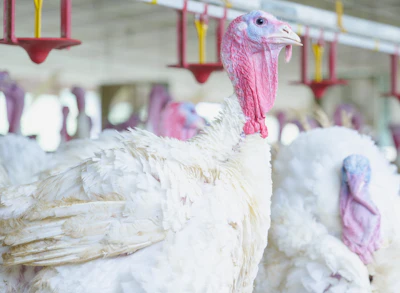
Turkey toms supplemented with added L-tryptophan grew heavier during a specific window in the production cycle and had lower mortality overall, according to research presented by Allison Pullin, assistant professor of animal welfare, North Carolina State University.
Tryptophan-fed birds were about 0.2 kilograms heavier at 10 weeks of age than birds on a standard diet, Pullin said at the Poultry Science Association Annual Meeting on July 13 in Toronto, Canada. The advantage traced back to higher body weight gain specifically between 7 and 10 weeks, with no differences observed at any other age.
"There may be opportunities to think about targeted tryptophan supplementation during specific periods of production," Pullin said, noting that tryptophan becomes more limiting in turkeys between 7 and 12 weeks of age than during the starter or finisher periods. She pointed to similar findings in broilers, where tryptophan supplementation improved weight gain only during the starter period, not the finisher phase.
The results contrast with a 1990s turkey study that found no performance benefit from tryptophan — but that trial supplemented the amino acid only during the finisher phase, from 16 to 19 weeks. Pullin's study is the first to test supplementation across an entire turkey production cycle.
Researchers raised 1,000 eight-day-old turkey tom poults across 48 pens at NC State's Talley Turkey Education Unit, testing three commercial large white strains on two diets: a standard corn-soybean meal ration and the same diet with 0.1% added L-tryptophan. The trial ran from July to November and followed birds through 19 weeks of age.
Beyond growth, tryptophan-supplemented birds also had 5% lower cumulative mortality than control birds, driven largely by fewer culls for leg health and mobility issues — one of the turkey industry's leading causes of non-infectious mortality. Pullin said a previous turkey study found heavier thigh weights in tryptophan-supplemented birds, suggesting the amino acid may support leg muscle development.
Not every result matched expectations. Tryptophan has reduced feather pecking in laying hens and breeder pullets in prior research, but injurious pecking culls were statistically identical between the two turkey diet groups, at about 3% each.
Pullin's team is analyzing blood samples to determine the biological mechanism behind the reduced leg health culls, with future research also planned on tryptophan's behavioral effects in turkeys.