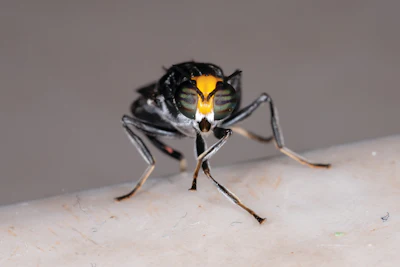
Harvested insects could be a low-cost, natural source of methionine in organic poultry feed, addressing one of the most persistent nutritional challenges facing specialty producers.
Organic poultry production prohibits the use of most synthetic animal acids, apart from methionine due to its high biological requirement. Because of this, there is a need for natural alternatives.
A new project will analyze the use of harvested insects and commercially raised crickets for organic poultry production.
Insects are rich in methionine, lysine and threonine, which are all necessary components of poultry diets. In addition, insects are raised on organic waste products, reducing the environmental impact of feed production and contributing to a circular economy.
“By evaluating both wild-harvested and commercially raised insects, such as crickets, for nutrient content, safety, growth performance and economic feasibility, this research could offer organic producers new feed options that meet regulatory requirements and potentially reduce feed costs,” explained Adnan Alrubaye, assistant professor of poultry science in the Dale Bumpers College of Agricultural, Food and Life Sciences at the University of Arkansas and associate director of the university's graduate program in cell and molecular biology.
Alrubaye is also part of the Arkansas Agricultural Experiment Station, the research arm of the University of Arkansas System Division of Agriculture.
Evaluating insect meal in organic poultry diets
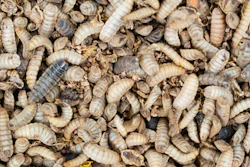
The first phase of the project will explore the collection and preparation of insect meal. Organic farmers will be given traps to collect houseflies themselves, which will help to save costs.
During the processing stage, the harvested insects will be screened for a variety of pathogens, including Salmonella and Campylobacter. The research team also plans to evaluate the insect meal for true metabolizable energy and digestible animo acid levels and formulate suggested rations for organic broilers.
In the second phase, feed trials will compare growth and feed efficiency in broilers fed the insect meal versus synthetic methionine.
“We hope this project will demonstrate that insect meals can safely and effectively replace or supplement traditional protein and methionine sources in organic poultry diets, provide real-world data on bird performance, meat quality and economic feasibility that organic farmers can trust and use and lead to practical extension tools, trainings and resources that help producers adopt insect-based feeds where appropriate, strengthening organic poultry production systems nationwide,” said Alrubaye.
The research is funded by a nearly $1 million grant from the U.S. Department of Agriculture’s National Institute of Food and Agriculture.