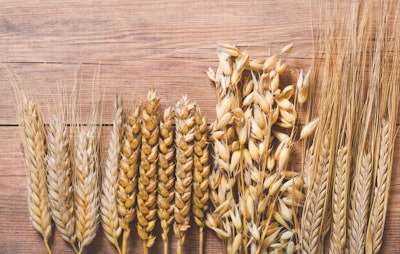
Energy remains the most expensive “nutrient” in every animal diet and, with the war in Ukraine and the drought in U.S. and EU cereals (energy), are going from expensive to unavailable. Thus, many feed professionals are looking into unconventional cereals (rye, triticale, rice, sorghum, etc.).
The major source of energy in all cereals is starch, which makes up about 50% of most diets for monogastric animals. Increasing the amount of available energy from all cereals, especially of those containing high levels of non-starch polysaccharides, can be achieved by using suitable enzyme supplementation in the feed. Increasing the utilization of energy from cereals and even protein sources (such as soybean meal, sunflower meal, peas, etc.), which also contain substantial amounts of energy-yielding carbohydrates, can improve feed efficiency, reduce feed cost, lessen the environmental impact, and improve profitability.
Carbohydrates is the collective term used for starch, sugars and “fiber” polysaccharides. Carbohydrates can be classified into two categories: storage carbohydrates and structural carbohydrates. Storage carbohydrates include starch and simple sugars (such as fructose and saccharose). These carbohydrates, along with lipids in the embryonic part of seeds, are the main energy sources for the new plants that will be emerging from cereal seeds (if they were to be planted). Structural carbohydrates, on the other hand, including the well-known non-starch polysaccharides, are responsible for cellular form and structure and as such they are located mostly in the outer cellular membrane. Structural carbohydrates, commonly referred to as “fiber,” are not digested by monogastric animals due to lack of suitable endogenous enzymes. Thus, the majority of structural carbohydrates are fermented in the hind gut, where they may release limited useful energy levels (covering less than 5% of daily needs for the animal), in the form of volatile fatty acids.
Carbohydrases attack fiber carbohydrates, releasing energy that would be otherwise lost for the animal.
Energy remains the most expensive “nutrient” in every animal diet and, with the war in Ukraine and the drought in U.S. and EU cereals (energy), are going from expensive to unavailable. Thus, many feed professionals are looking into unconventional cereals (rye, triticale, rice, sorghum, etc.).
The major source of energy in all cereals is starch, which makes up about 50% of most diets for monogastric animals. Increasing the amount of available energy from all cereals, especially of those containing high levels of non-starch polysaccharides, can be achieved by using suitable enzyme supplementation in the feed. Increasing the utilization of energy from cereals and even protein sources (such as soybean meal, sunflower meal, peas, etc.), which also contain substantial amounts of energy-yielding carbohydrates, can improve feed efficiency, reduce feed cost, lessen the environmental impact, and improve profitability.
Carbohydrates
Carbohydrates is the collective term used for starch, sugars and “fiber” polysaccharides. Carbohydrates can be classified into two categories: storage carbohydrates and structural carbohydrates. Storage carbohydrates include starch and simple sugars (such as fructose and saccharose). These carbohydrates, along with lipids in the embryonic part of seeds, are the main energy sources for the new plants that will be emerging from cereal seeds (if they were to be planted). Structural carbohydrates, on the other hand, including the well-known non-starch polysaccharides, are responsible for cellular form and structure and as such they are located mostly in the outer cellular membrane. Structural carbohydrates, commonly referred to as “fiber,” are not digested by monogastric animals due to lack of suitable endogenous enzymes. Thus, the majority of structural carbohydrates are fermented in the hind gut, where they may release limited useful energy levels (covering less than 5% of daily needs for the animal), in the form of volatile fatty acids.
Carbohydrases
Carbohydrases are specific commercial enzyme preparations that attack those fiber carbohydrates, releasing energy that would be otherwise lost for the animal. They work by opening the cell wall structure of intact plant cells, releasing energy (starch) and other nutrients, such as protein, minerals and lipids. In addition, these fibrous plant cell wall fractions increase intestinal viscosity that leads to reduced nutrient absorption, accelerated proliferation of pathogens, such as Escherichia coli, and other problems (such as sticky droppings, dirty eggs, etc). Today, the majority of commercial carbohydrases are for use against these structural carbohydrates, although carbohydrases for starch (amylases) are also available.
Amylase
In cereals, up to 80% of the dry matter is starch. For pigs and poultry, starch digestibility is rather high, ranging from 92% to 95%. Nevertheless, given the extremely high concentration of starch in cereals, even the slightest improvement in digestibility will have a significant impact on energy utilization. Therefore, the use of carbohydrases in animal feed has a clear financial interest, especially when cereal prices are high.
Starch is made up of glucose molecules linked together to from either a linear (amylose) or branched (amylopectin) polymer. Although monogastric animals produce enough endogenous amylase, supplementation with an exogenous amylase – which degrades amylase and amylopectin – has been shown to marginally improve starch digestibility, especially in young animals. However, results remain ambiguous because the use of amylase is affected not only animal age and cereal type, as well as by the degree of cereal grinding and other feed processing treatments.
NSP enzymes
The cell wall of cereals, made of structural carbohydrates, is composed mostly of arabinoxylans and beta-glucans. The exact chemical structure of arabinoxylans and beta-glucans varies among the different cereal types and their varieties. To enhance the “opening” of cells within the gastrointestinal tract, exogenous enzymes are required to be added in the feed. For cereals, these enzymes include xylanases and beta-glucanases, which have been shown to improve energy utilization, and also reduce digesta viscosity, especially when the levels of non-starch polysaccharides are particularly elevated.
This last aspect is frequently the source of considerable confusion in the interpretation of many scientific trials, as in most cases the exact levels (or quality) of non-starch polysaccharides in cereals is not measured.