The dairy industry continues to refine how we think about protein efficiency, and a recent release from the Canola Council of Canada highlights an issue that deserves our attention: cows don’t benefit from more protein, but rather from better-balanced protein.
For decades, rations often carried at least one percentage point buffer of extra crude protein to avoid shortfalls. But research — and practical formulation work using the latest models from the National Academies of Sciences, Engineering and Medicine (NASEM) — make it clear that unused protein is not benign. When animals receive more nitrogen than they can utilize, they spend energy breaking it down, converting it to urea and excreting it. Studies have shown maintenance energy use can rise by more than 5% when ruminants are fed poorly balanced protein sources. In dairy research, this metabolic detour has been linked to reduced milk energy output (milk and fat). In other words, inefficiency has a daily measurable cost.
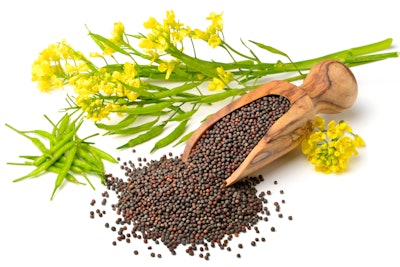
According to the above release, canola meal’s amino acid profile aligns well with what high-performing dairy cows need, and its characteristics support strong microbial protein synthesis — the foundation of the cow’s metabolizable amino acid supply. When roughly half of the cow’s needs come from microbes (that’s a matter for another debate), closing the remaining gap with a well-matched protein source reduces nitrogen overage and the energy drain that comes with it. Based on recent reports, canola appears to be such an ingredient.
This aligns closely with what I continue to see as I formulate tighter, more efficient total mixed rations — better protein balance often means we can achieve more with less. As the industry moves toward greater feed efficiency, energy conservation and precision nutrition, ingredients that naturally align with ruminant metabolism offer a real advantage. And in a world where every point of efficiency matters, that distinction is worth paying attention to.