When you have rodents in your poultry barns, the financial costs to your poultry operation could be more significant than you might realize.
Zac Williams, University of Arkansas (U of A) poultry science extension specialist discussed the problems rodents – particularly rats – can cause, while also offering suggestions on how to assess and control the situation. Williams spoke during the U of A webinar, “Rodent Control as Part of Biosecurity Program,” on January 21.
Cost of feed waste
Williams provided an estimate that a single rat will consume about 25 pounds of feed annually. When you multiply that by the number of rats in the barn, the costs could be quite substantial.
A moderate and common infestation of 200 rats in one barn would mean that the rodents would consume about 2.5 tons of feed per year. At current feed prices of $225 to $250 per ton, that would translate into a $500-$600 loss in direct feed costs.
However, Williams said you cannot just look at the losses related to feed directly eaten by the rodents.
“That’s just feed that they’ve consumed. We’re not talking about how much feed they’ve wasted or how much feed they’ve contaminated by just coming into contact with it,” Williams said.
Damage to barns and other losses
Rats “will chew everything,” Williams said, and as such, can cause a lot of physical damage to barns.
“That’s equipment, egg belts, plastic, concrete, sheet metal, electrical wires, insulation, wood — everything over time,” he said.
Chewed electrical wires create fire hazards and equipment failures, Williams added. Compromised insulation reduces energy efficiency and structural integrity. In severe cases, rodents even consume eggs and chicks, creating direct product losses.
Disease transmission presents another costly concern. Rodents carry numerous diseases and pathogens, with Salmonella and highly pathogenic avian influenza (HPAI) being particularly problematic. Williams noted recent observations from HPAI-positive barns revealed control rooms covered in rat droppings, highlighting the disease risk posed by uncontrolled populations.
Identifying your rodent problem
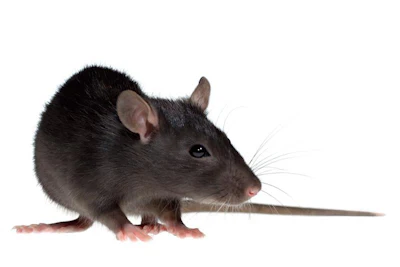
Williams said three primary rodent species infest poultry operations: Norway rats (brown-gray, 10 inches long, tail shorter than body), roof rats (darker, more slender, tail longer than body) and house mice (2.5-3.5 inches, large ears, gray fur). Each species exhibits different behaviors requiring targeted control strategies.
Infestation severity can be assessed through sighting patterns. Signs without sightings suggest approximately 100 rodents per barn. Frequent nighttime sightings indicate 200-600 rodents, while daytime sightings signal thousands — requiring immediate, aggressive intervention.
Control strategies
Williams said successful rodent management requires a multi-pronged approach combining three key elements.
First, eliminate entry points. Screen all ventilation openings with heavy-gauge wire. Repair structural damage and seal holes — mice can squeeze through openings as small as a pencil width. Remove hiding places outside barns, including weeds, lumber stacks and debris piles that provide cover for rodents traveling from fields.
Second, reduce populations through strategic trap and bait placement. Consider rodent behavior when positioning controls: rats travel up to 100 feet from their home area, while mice typically stay within 20 feet. Place traps along walls in dark areas. For roof rats, secure traps to rafters and overhead beams. Use bait stations as protective hiding spots outside barns to intercept rodents before they enter structures. Cats and electronic devices that sent out high-pitched sounds have also been parts of rodent control conversations, but Williams advises against both. Cats can carry disease and be a threat to your birds, while the rodents will gradually get used to the high-pitched sounds from those electronic devices and they will no longer be deterred, he said.
Third, verify effectiveness regularly. During barn cleanouts, Williams said you should inspect for new burrows and recent activity. Evaluate whether your control program is working and adjust strategies as needed.