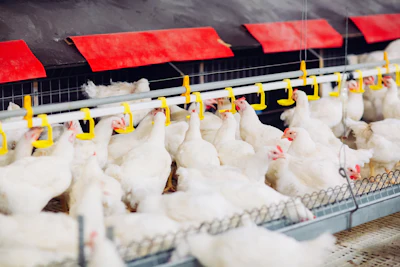
Amino-acid-complexed zinc significantly improves broiler performance compared to inorganic zinc, with studies showing increased body weight, better feed conversion, and higher breast meat yield because this form of zinc is absorbed more efficiently through the amino acid pathway and retained longer in the bird's body.
- Body weight improvement: Amino-acid-complexed zinc at 60 ppm increased average body weight by 77 grams per bird across seven studies
- Feed conversion gains: Feed conversion improved by 2.8 points on average compared with other zinc sources at the same level
- Better absorption: Amino-acid-complexed zinc binds in a one-to-one ratio, allowing absorption through the amino acid pathway for quicker uptake and longer retention
- Phytase impact: High phytase levels in modern diets have changed zinc requirements, making older supplementation guidelines based on phytase-free diets outdated
- Breast meat yield: Across five observations, breast meat yield rose by 0.43 percentage points, approximately 43 grams per bird
Broilers fed an amino-acid-complexed zinc source outperformed birds fed inorganic zinc in a series of trials, suggesting that the form of supplemental zinc, not just the amount, could affect growth, feed conversion and breast meat yield, particularly in diets with high phytase levels.
“Yes, supplemental zinc matters, but we need to move beyond thinking only about how much zinc. We also need to understand the zinc source that we are choosing to supplement,” Cibele Torres, Ph.D., poultry technical services and nutrition specialist at Zinpro, said during a November 5 webinar sponsored by the company and hosted by WATTPoultry and Feed Strategy.
Austin Jasek, Ph.D., technical account manager at Zinpro, and Kyle Venter, Ph.D., innovation manager at Neuro Livestock Research, joined Torres as webinar speakers.
According to Jasek, amino-acid-complexed zinc fed as the sole supplemental zinc source at 60 parts per million (ppm) improved body weight by an average of 77 grams per bird across seven studies and 12 observations.
“While the difference varies, the improvement is very clear,” he explained.
Feed conversion improved by 2.8 points on average compared with other zinc sources at the same level. Across five observations, breast meat yield rose by 0.43 percentage points, or about 43 grams per bird.
Differences in how the zinc is absorbed may explain the results. Inorganic minerals compete for shared transporters, Torres said, and “simply having more zinc available in the lumen does not necessarily mean that that zinc will be absorbed and utilized by the bird.”
Zinc bound to an amino acid in a one-to-one ratio can also be absorbed through the amino acid pathway. That structure allows “quicker absorption into the animal and longer retention time within the animal as well,” Jasek added.
Why requirements are being revisited
Supplemental zinc levels recommended by leading breeders, which exceed 100 ppm, have changed little since the early 2000s. Much of the foundational work was done in diets without phytase, Venter said, which can inflate the apparent requirement because phytate binds zinc and other minerals.
“High phytase doses have completely changed the playing field when it comes to broiler nutrition from a mineral perspective,” he explained. “We know that early work done on zinc requirements that are absent of phytase is somewhat outdated.”
To register for upcoming webinars or see On-Demand webinars on related topics, visit: www.wattpoultry.com/webinars.