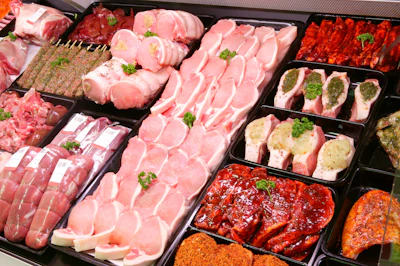
A new white paper from North Dakota State University shows that retail pork price premiums and retail price increases remain elevated two years after the implementation of Proposition 12, but pork raised in compliance with the law makes up only a small share of the market.
California’s Proposition 12, and the similar Question 3 in Massachussets, establishes minimum space requirements based on square feet for breeding pigs, veal calves and egg-laying hens, and bans the sale of meat and eggs from those animals when they are raised in a way that does not comply with the minimum requirements. Proposition 12 was fully implemented in January 2024.
“Proposition 12 changed the economics of pork marketing by making access to the California market contingent on compliance with production standards applied throughout the supply chain,” the white paper says. “Because the law governs the sale of pork in a large consuming state rather than production within a single region, its effects are not confined to farms. They extend to segregation, certification, product allocation and pricing decisions from the packing plant to the retail shelf. The policy, therefore, raises a broader question than whether compliance is costly. It asks how a retail market access rule reorganizes trade and pricing in a nationally integrated pork market.”
The data in the white paper show “a clear break in California’s retail pork price relationship with the rest of the United States” and a “durable upward shift in the relative price of pork sold in California.”
Key findings of the report
From January 2024 to January 2026, the retail price gap between compliant-state markets and the conventional benchmark market averaged 85.4 cents per pound, up from a pre-enforcement average of 14.2 cents per pound, according to the report. This implies an overall widening of 71.2 cents per pound, with state-specific estimates of 72.7 cents per pound in California and 62.8 cents per pound in Massachusetts.
Meanwhile, the wholesale compliance premium widened by 24.2 cents per pound relative to the same pre-enforcement baseline. This yields an amplification factor of 2.95 overall, with corresponding estimates of 3.01 for California and 2.60 for Massachusetts, indicating substantial amplification between the wholesale and retail levels.
These higher consumer costs coincide with lower pork purchase, the report found. California’s share of U.S. pork purchases declined from 8.5% to 7.1% in the post-implementation period. Estimated additional consumer spending totaled $403.1 million at retail in California and Massachusetts combined, compared with $184.7 million in wholesale compliance costs. Of the $403.1 million retail burden, 54.1% is attributable to retail amplification, 30.2% to the producer premium, and 15.7% to packer net margin, indicating that most of the burden arises after the packing plant and before the final retail sale.
At the wholesale level, pork raised in compliance with Proposition 12 accounted for an average of 5.3% of reported volume from January 2024 to January 2026, peaking at about 7.2%.
The white paper used weekly retail scanner data from Circana from January 2020 to January 2026.
A previous report from March 2024 by the U.S. Department of Agriculture’s Office of the Chief Economist said their analysis of preliminary data at the time showed pork prices of products in California that are affected by Prop 12 rose, on average, 20% after July 1, 2023, with pork loins experiencing the largest increase, up 41%.