The Indian animal feed sector faces significant headwinds in 2026 as the ongoing military conflict in the Middle East puts pressure on production costs for domestic feed manufacturers. According to the Indian government's latest economic report, shipping disruptions in the Strait of Hormuz and surging energy costs stemming from the Iran war are threatening to undermine one of the world's largest economies.
India's economy had been on a strong growth trajectory since 2023, supported in part by access to discounted Russian oil redirected away from Western markets. That dynamic helped drive annual GDP growth of 7-8%, cementing India's position as the world's third-largest economy. Prior to the launch of the U.S.-Israeli war on Iran, most analysts expected similar growth to continue through the year. The escalation of conflict in the Middle East has put those forecasts in doubt.

A ResearchAndMarkets report, "India Animal Feed Market Forecasts from 2023 to 2028," had projected annual sector growth of 4-5%, with the industry reaching an overall value of $15.39 billion by 2028, up from approximately $12 billion today. Analysts now consider those projections unlikely to be met given current conditions.
Hormuz closure hits amino acid supply
The closure of the Strait of Hormuz is among the most consequential near-term risks for the feed sector. The strait controls nearly 45% of global seaborne methanol exports, and methanol is the primary feedstock for formic acid, a key feed preservation compound, as well as a critical input in the manufacture of methionine, an essential amino acid in poultry nutrition.
Price increases have already materialized. In mid-March, producers announced emergency surcharges of EUR250 (US$289) per metric ton on formic acid and EUR150 per metric ton on propionic acid.
Fertilizer dependency compounds grain supply risk
More than 40% of India's fertilizers are imported from Gulf states. A prolonged conflict, extending 90 days or more, and associated supply disruptions could force Indian farmers to reduce maize and soybean production, tightening domestic raw material supplies for feed manufacturers and threatening output.
India's compound feed industry produces an estimated 60 million metric tons annually, according to Divya Kumar Gulati, chairman of the Compound Livestock Feed Manufacturers Association of India (CLFMA). That total includes approximately 40 million metric tons of poultry feed, 18 million metric tons of cattle feed and 2 million metric tons of aqua and shrimp feed.
Trade relief offers partial offset
Indian officials and industry analysts have pointed to a recently announced India-U.S. interim trade agreement as a partial buffer against supply disruptions. The agreement reduces or eliminates duties on U.S. exports including dried distillers grains (DDGS) and red sorghum, providing alternative feed ingredient access. India, however, has not moved to allow imports of genetically modified (GM) corn or soybeans from the U.S., Brazil or Argentina.
India's position on GM grain imports has been firm. The country's Directorate General of Foreign Trade allowed a temporary import of 1.2 million metric tons of soybean meal and cake derived from GM oilseed in August 2021, but only in response to a domestic shortage and price spike.
Long-term demand and investment remain strong
Despite near-term disruptions, India's structural demand outlook remains favorable. Rising meat and dairy consumption, combined with population growth – India's 1.4 billion people are projected to reach 1.53 billion by 2047 – continue to drive demand for poultry, eggs and livestock products and, by extension, compound feed.
Global feed companies are acting on that long-term view.
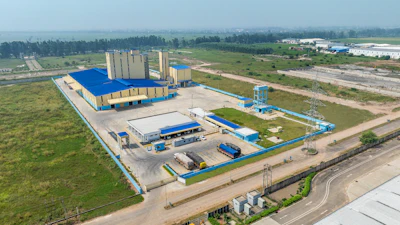
De Heus India, a subsidiary of Netherlands-based De Heus Animal Nutrition, opened a new feed mill in Rajpura, Punjab last year. The $17 million facility, which the company describes as among the largest and most advanced in India, has an installed capacity of 180,000 metric tons per year, expandable to 240,000. The plant operates separate production lines for cattle, buffalo, poultry and pig feed and incorporates European automation technology.