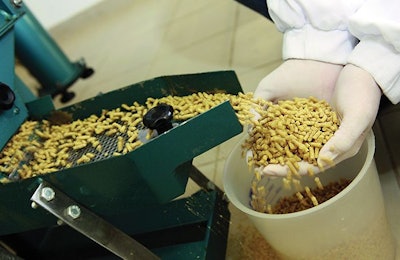
It is often said that feed formulation is a science and an art. Yet even the most precise formulation is only as effective as the processing it undergoes. Whether we speak of pelleting, extrusion or micronization, feed processing is far more than a logistical step – it is a nutritional decision, and its effects on nutrient availability and digestibility are profound.
Different processing methods can dramatically alter the physical structure of feed ingredients, modifying their behavior in the digestive tract. For instance, heat treatments such as extrusion or toasting can deactivate antinutritional factors in soybean meal, improving amino acid digestibility. Conversely, excessive heat can destroy heat-sensitive vitamins or lead to Maillard reactions that bind lysine, reducing its bioavailability.