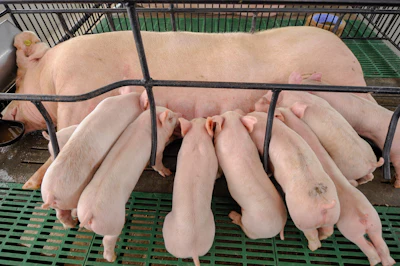
The Foundation for Food & Agriculture Research (FFAR), the Pork Checkoff and industry stakeholders are investing US$1,643,357 in the Pig Livability Project. The Pork Checkoff and other industry stakeholders are providing an additional US$893,357 on top of FFAR’s $750,000 contribution. Led by Iowa State University (ISU) in collaboration with Kansas State University (K-State), the project seeks practical ways to reduce pig deaths in the U.S. pork industry.
Reducing pig mortality is a complex challenge influenced by animal health, management, environment and other factors throughout production. Identifying practical ways to address those factors can improve pig welfare while helping producers protect herd health and productivity.
This collaborative project combines research, education and Extension at ISU and K-State. To complement that work and address key questions about pig deaths, the project also issued a competitive call for research. The Pig Livability Project announced US$250,000 in funding for seven projects selected through that process:
- Dr. Alyssa Betlach, Swine Vet Center: Association of periodic whole-herd antimicrobial administration and risk and time to sow mortality, removal and clinical treatment events
- Dr. Katelyn Gaffield, K-State: Can a simplified, fiber-rich transition diet reduce stillborns and improve pre-weaning livability?
- Dr. Jordan Gebhardt, K-State: Barn sanitation to enhance pig livability: What do we know and what are we doing?
- Dr. Chris Puls, United Animal Health: Effects of sow and piglet blood hemoglobin and anemia levels on sow and pig performance
- Haley Schwecke and Dr. Alyssa Betlach, Swine Vet Center: Determinants of transport-related mortality in swine production: A multi-system meta-analysis of health, management and transport-associated risk factors
- Dr. Eric Weaver, South Dakota State University (SDSU): Evaluation of piglet skeletal development in response to late-gestation maternal nutrition
- Dr. Eric Weaver, SDSU: Improving sow and piglet resilience through multi-cycle, biomarker-guided optimization of late-gestation nutrition
The Pig Livability Project initially received US$2 million from FFAR and the Pork Checkoff, with each contributing US$1 million, to fund swine livability research from 2019 to 2024. The research identified practical strategies to reduce pig mortality, including earlier treatment of sow lameness and improvements in nutrition, feeding and enrichment. It also produced the first free, publicly available tools that use farm-specific data to estimate mortality costs and the financial benefits of prevention strategies. In one trial, early assessment and treatment reduced mortality by 4.9% at a 4,800-sow farm — an improvement the project’s new economic assessment tool estimated could be worth US$240,000.
The projects build on these initial findings and focus on solutions producers and veterinarians can use.
FFAR is investing in research to reduce swine mortality to improve animal welfare and increase producer profits, which complements the U.S. Department of Agriculture’s Research and Development Priority of Increasing Profitability of Farmers and Ranchers.