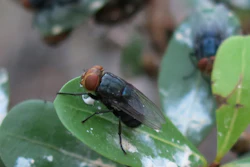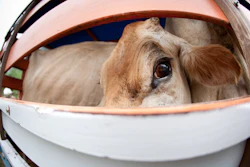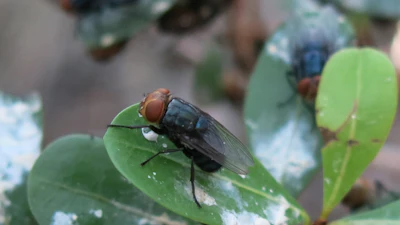
To address the ongoing threats from New World screwworm (NWS), the Foundation for Food & Agriculture Research (FFAR) and Medgene are investing $499,996 in a Rapid Outcomes from Agricultural Research (ROAR) grant to develop and test a vaccine that could help protect cattle from this harmful parasite.
“New World screwworm infestations can rapidly cause severe tissue damage and can be fatal within seven to 14 days if left untreated. The parasite threatens more than $100 billion in U.S. economic activity tied to the cattle and livestock industry alone,” said Dr. Jasmine Bruno, FFAR scientific program director. “We urgently need multiple tools to protect cattle and other vulnerable livestock. A vaccine could provide a critical additional layer of protection while complementing existing control efforts.”
Led by Dr. Casey Wright, bacteriology development manager at Medgene, researchers are developing a vaccine that targets proteins NWS larvae need to feed and develop. The goal is to trigger antibodies in vaccinated cattle that interfere with the larvae’s ability to feed on tissue and complete their life cycle.
Using Medgene’s scalable vaccine production platform, the team is vaccinating cattle, assessing safety and measuring their immune response to determine whether the vaccine should advance to field studies.
“This project is another great opportunity for Medgene to partner with FFAR and demonstrate how our platform technology can be leveraged to rapidly support the U.S. livestock industry with emerging threats,” Wright said. “With this project, we are excited to help veterinarians in the fight against New World Screwworm, just as we have done with other parasites.”
If successful, the vaccine could give producers another tool to protect cattle and limit NWS spread. A vaccine could be particularly valuable in extensive production systems, where livestock are dispersed across large areas and frequent monitoring and treatment can be challenging. The approach would complement the sterile insect release program and other control measures by preventing larvae from successfully feeding and developing in cattle.
This research supports U.S. Department of Agriculture's research priority on protecting the integrity of american agriculture from invasive species.
FFAR’s ROAR program rapidly funds research and outreach in response to emerging or unanticipated threats to the U.S. food supply or agricultural systems.