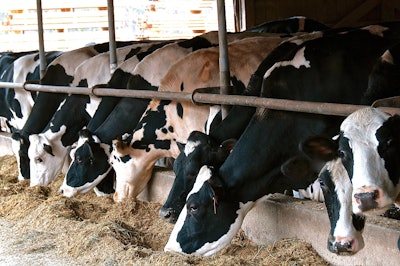
The first known case of H5N1 avian influenza in cattle in Wisconsin has been confirmed, officials announced December 14.
The U.S. Department of Agriculture’s Animal and Plant Health Inspection Service (APHIS) National Veterinary Services Laboratories (NVSL) confirmed via PCR (polymerase chain reaction) and ELISA (enzyme-linked immunosorbent assay) assay a detection of highly pathogenic avian influenza (HPAI) H5 clade 2.3.4.4b in a dairy cattle herd in Wisconsin.
APHIS will complete genetic sequencing and announce final results as soon as they are available. This confirmation was a result of routine National Milk Testing Strategy testing, not pre-movement surveillance.
While dairy cattle in 18 states have been infected since the start of the outbreak in March 2024, APHIS has seen cases in only a small number of states this year. APHIS is working closely with the Wisconsin Department of Agriculture, Trade and Consumer Protection to conduct additional on-farm investigations, diagnostic testing and epidemiological data collection to better understand the detection and prevent further disease spread.
The detection does not change USDA’s HPAI eradication strategy. Biosecurity is still key to mitigating the risk of disease introduction or spread between premises. APHIS recommends enhanced biosecurity measures for all dairy farms. Producers should immediately report any livestock with clinical signs, or any unusual sick or dead wildlife, to their state veterinarian.
This detection does not pose a risk to consumer health or affect the safety of the commercial milk supply. The U.S. Food and Drug Administration is confident that pasteurization is effective at inactivating HPAI virus, and that the commercial, pasteurized milk supply is safe. Dairies are required to send only milk from healthy animals into processing for human consumption; milk from impacted animals is being diverted from the commercial milk tank or destroyed so that it does not enter the human food supply.
According to the U.S. Centers for Disease Control and Prevention (CDC), HPAI viruses circulating in birds and U.S. dairy cattle pose a low risk to the general public in the United States. However, people who have job-related or recreational exposures to infected birds or mammals are at higher risk of infection and should take appropriate precautions outlined in CDC guidance.