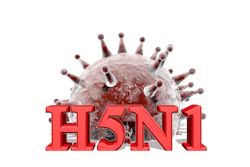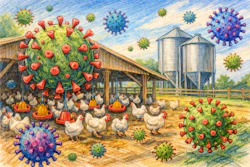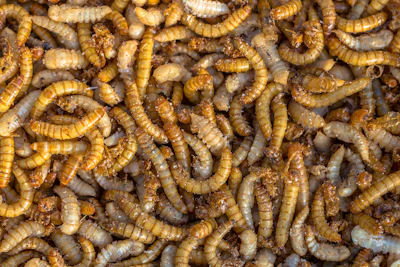
A Kansas State University research team is developing a highly pathogenic avian influenza (HPAI) vaccine delivered through gene-edited mealworms, an approach that could reduce flock losses while also eliminate some of the logistical challenges associated with vaccination.
Funded by a Highly Pathogenic Avian Influenza (HPAI) Poultry Innovation Grand Challenge Award. the project targets proof-of-concept within three years. Initial efficacy studies will focus on commercial layers, currently the segment most affected by HPAI outbreaks, with potential expansion to broilers, turkeys, and other poultry species as the research advances.
"We're really excited about this and the opportunity to do something highly innovative and something new," said Dr. Laura Miller, associate professor of veterinary virology, immunology and genomics at Kansas State University. "It is maybe high risk, but I think it has a lot of potential."
HPAI remains a costly and operationally disruptive threat for the commercial poultry sector. The virus mutates rapidly, spreads through wild migratory bird populations and, as of now, the only approved control method is depopulation.
"The only choice currently is to depopulate for control, and that's expensive, it's not easy," Miller said. "Having to repopulate in the time it takes to do that is a challenge."
The project draws on expertise across multiple institutions, including entomology researchers at North Carolina State University, influenza specialists at St. Jude's and the National Animal Disease Center and poultry pathologists at Kansas State University’s veterinary diagnostic lab.
How a mealworm vaccine would work
The team's approach centers on gene-editing mealworms to express an HPAI antigen protein directly in the insect's body. Chickens consume the mealworms as part of their normal feed, absorbing the antigen through the gut and mounting an immune response.
The vaccine also incorporates targeting molecules designed to engage specific immune cells in the chicken gut, improving both the quality and speed of immune response.
Critically for an industry facing a rapidly mutating pathogen, the platform's gene-editing mechanism is designed for rapid updating. As new HPAI strains emerge, researchers say the antigen insert can be swapped into the mealworm genome within months.
The vaccine is being designed as a Differentiating Infected from Vaccinated Animals (DIVA)-compliant product — meaning it will differentiate between infected and vaccinated animals — a requirement under World Organisation for Animal Health (WOAH) guidelines and a prerequisite for use in trade-sensitive markets.
Benefits over traditional vaccination approaches
Because mealworms can be produced at existing insect farms across the country rather than at a single biomanufacturing facility, the team believes the approach could scale rapidly and cost-effectively both domestically and in developing countries where poultry represent a primary protein source.
"Using the insect as encapsulation for the antigen makes it safer because it's natural feed," Miller said. "We don't need any cold chain, it doesn't need refrigeration. And we know poultry like live mealworms, but we could even do freeze-dried."
Injection-based vaccines require birds to be caught and handled individually, a labor-intensive process that is costly and stressful for animals. Reducing human contact with birds can also lower biosecurity risk, removing a potential touchpoint for disease introduction.
And because the mealworms can be freeze-dried and stored at ambient temperature, the vaccine eliminates cold chain dependency, a logistical and cost barriers to vaccine adoption.
To learn more about HPAI cases in commercial poultry flocks in the United States, Mexico and Canada, see an interactive map on WATTPoultry.com.
View our continuing coverage of the global avian influenza situation.