JegasRa | BigStock.com
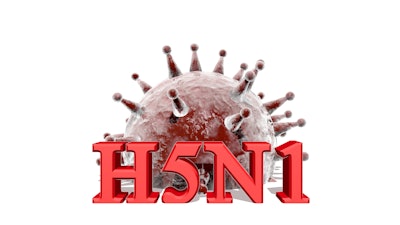
Mutations associated with the severe H5N1 outbreaks in 2022 and 2024 were circulating in North America long before the virus appeared in cows and other mammals, according to research from South Korea's Institute for Basic Science and St. Jude Children's Research Hospital.
The molecular structure of the strains associated with the 2022 outbreaks contains two mutations that appear to be unique and responsible for the virus's ability to cause severe disease in a range of mammals, according to research published in the journal Science Advances.