FeedMatch Group, a London-based business-to-business feed procurement platform, has expanded its sourcing work to cover microbial proteins, algae-derived nutrients, insect proteins and specialty feed additives for livestock, poultry and aquaculture buyers.
FeedMatch, part of Global B2B Group, does not make feed, hold inventory, formulate diets or take ownership of products. Buyers contract directly with independent suppliers, while FeedMatch coordinates the sourcing.
The mechanics are simple. Buyers define a requirement, and FeedMatch prepares a structured request for quotation, identifies suppliers and compares offers on specifications, price, logistics and commercial terms. Its existing work covers grains, protein meals, premixes, specialty additives and feed-processing equipment for poultry, cattle, swine and aquaculture operations.
The expansion leans heavily on single-cell protein, made by fermenting bacteria, yeast or fungi. The Centre for Feed Innovation estimates in its 2026 State of the Industry Report on single-cell proteins that global production reached 30,000 to 40,000 metric tons in 2025 and could climb to 150,000 to 500,000 metric tons by 2030. Trials cited in the report show single-cell protein replacing up to 100% of fishmeal in shrimp feed and up to 50% in some fish species, including seabream and bass.
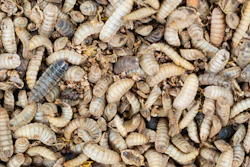
FeedMatch said production costs, regulatory requirements and commercial-scale availability remain hurdles. Beyond single-cell protein, the company is sourcing algae oils as DHA and EPA omega-3 sources for aquafeed, black soldier fly larvae protein, and enzymes, probiotics, amino acids and advanced premixes.
Anna Morgan, media and communications director at FeedMatch Group, framed the new ingredients as additions to conventional feed, not replacements.
"The future of animal feed will not be defined by one ingredient replacing another. It will be shaped by a wider range of nutritional solutions, production technologies and international supply relationships," Morgan said.
That shifts where the buyer's work lands. Production capacity, product consistency, regulatory approvals, certifications, shipment volumes, origin and landed cost can decide whether a novel ingredient is commercially viable, the company said.