Tyson Foods lowered its fiscal 2026 financial outlook on September 3 due to significant losses in its beef segment, now projecting revenue growth of 1.5-2% and total adjusted operating income of $1.85-2.05 billion, with the beef segment expected to lose $625-775 million due to volatile cattle prices and a record U.S. cattle shortage.
- Tyson revised fiscal 2026 revenue growth to 1.5-2% and adjusted operating income to $1.85-2.05 billion
- Beef segment projected to record operating losses of $625-775 million due to margin compression and cattle shortage
- Chicken segment remains resilient with expected operating income of $1.85-1.95 billion
- Company announced August restructuring consolidating beef operations around three central U.S. facilities to reduce costs
- Pork segment pressured by increased hog supplies, expected to generate $200-250 million in operating income
Tyson Foods updated its fiscal 2026 financial outlook Sept. 3, lowering expectations amid mounting losses in its beef segment.
The company now projects fiscal 2026 revenue growth of 1.5% to 2%, with total adjusted operating income of $1.85 billion to $2.05 billion. Tyson attributed the revision primarily to margin compression in beef, driven by volatile cattle prices, one of the most severe U.S. cattle shortages on record, and the effect of falling cattle prices on the value of live cattle inventories.
Tyson's updated segment guidance calls for a beef segment operating loss, as adjusted, of $625 million to $775 million. Chicken segment operating income is expected to reach $1.85 billion to $1.95 billion, while the pork segment is projected at $200 million to $250 million. The company left its outlook for the prepared foods and international segments unchanged.
Donnie King, Tyson's president and chief executive officer, said the beef pressures reflect broader cattle-cycle dynamics across the industry. He pointed to a restructuring announced in August that will consolidate Tyson's beef operations around three facilities in the central United States.
"We expect these actions to begin reducing operating cost pressures as we enter fiscal 2027," King said.
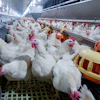
Tyson said consumer caution around discretionary spending has weighed on foodservice demand broadly, but its chicken business has continued to outperform the wider category in both branded and private-label retail and foodservice channels, aided by strategic customer partnerships and a growing value-added product mix.
In pork, increased hog availability has expanded industry-wide supplies, pushing hog and wholesale prices lower. Tyson said that decline has outpaced savings from lower livestock costs, compressing processing spreads and pressuring segment profitability.
The company said its prepared foods segment continues to perform well, citing revenue growth from category-leading brands, disciplined pricing and ongoing investment in innovation. Tyson's International segment, the company said, continues to deliver improved execution and more consistent earnings.
"Our diversified, multi-protein portfolio helps us manage pressure from individual commodity cycles," King said. "We remain focused on the factors within our control: operational execution, brand investment, innovation and deeper strategic customer relationships."
King said Tyson enters fiscal 2027 with a healthy balance sheet and continued momentum in its branded businesses.