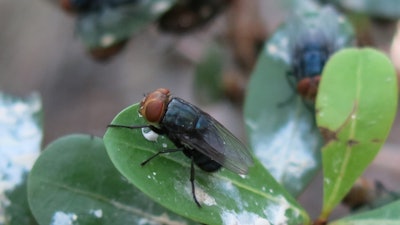
With $507,000 in funding from the California Department of Food and Agriculture, University of California Riverside (UCR) entomologists will begin monitoring the state for early signs of the return of New World screwworm.
New World screwworm is the larval or maggot stage of a shiny, metallic blowfly, a species called Cochliomyia hominivorax. While many blowflies are harmless and play a vital role in decomposing dead animals, this particular species feeds on living flesh. This species is known for laying its eggs in open wounds on warm-blooded animals, including humans. The maggots burrow into flesh in a corkscrew motion in a process that gives the fly its name.
This species of screwworm was once endemic to California and much of the southern U.S. It was successfully eliminated 60 years ago by releasing millions of sterile male flies. Because females only mate once, the approach caused the population to collapse. The screwworm eradication program pushed the fly as far south as Panama, where the U.S. Department of Agriculture (USDA) has maintained a barrier ever since.
But in recent years, the fly began reappearing in Central America and southern Mexico. Experts suspect the resurgence is due to infested animals being moved by people unintentionally helping the pest regain territory.
“It hasn’t been found in California yet, but it’s within 70 miles of the Texas border,” said Amy Murillo, UCR assistant professor of entomology and principal investigator of the new project. “We need to be prepared.”
Murillo and Alec Gerry, UCR veterinary entomology professor and CE specialist, are collaborating on the plan to deploy traps baited with a USDA-developed lure that smells like rotting flesh. While it will attract many types of blowflies, it is also effective at drawing in the New World screwworm. The team will monitor these traps for any signs the invasive fly has crossed into California.
The researchers will also launch an education campaign targeting veterinarians, livestock handlers and entomologists. These professionals are likely to encounter the pest first, and early detection is critical to preventing an outbreak.
The screwworm is particularly dangerous to farm animals that are already vulnerable due to common wounds from barbed wire, birthing, or medical procedures like dehorning. If left unchecked, infestations can become fatal as flies lay additional eggs that enlarge existing wounds.
California’s top agricultural commodities, dairy and cattle, are especially at risk.
“Most people think of citrus or avocados as being our top exports, but it’s actually dairy that leads our agricultural economy,” Murillo said.
Although the fly is not currently present in the state, raising awareness among the public is part of the prevention effort.
“Not all blowflies are harmful, and many are beneficial,” Murillo said. “But if you notice something unusual on your pet or livestock, reach out to a vet. Don’t ignore it.”
If a screwworm outbreak were to occur again, Murillo said the sterile insect technique that worked in the past remains the best line of defense.
Though the fly targets animals, it can infest humans under the right conditions, especially in open wounds left untreated. Cases have occurred in people who traveled to regions where the screwworm is active. However, farm animals are most at risk.
“They need an opening in the flesh, and it doesn’t have to be large. They don’t make wounds, but they do exploit them,” Murillo said.
Murillo emphasized that she doesn’t want to create panic about the return of the insects.
“You don’t have to worry that they’re going to start eating your flesh,” Murillo said. “But we do hope that this project will help people to be more vigilant in recognizing and preventing screwworm infestations in animals should they return to California.”