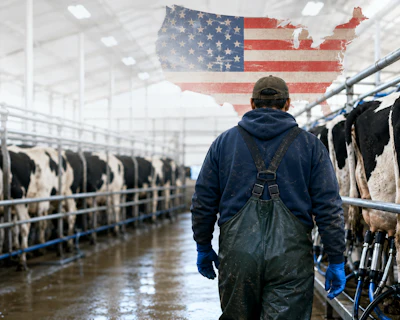
The shortage of agricultural workers is one of the biggest problems facing U.S. agriculture today, leaders with the American Farm Bureau Federation (AFBF) say.
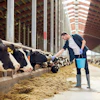
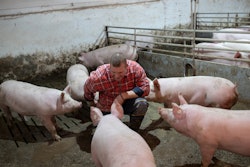
For those in animal agriculture, that problem doesn’t just hurt the farmers, it also hurts the animals said Ryan Akin, a partner in a dairy and cabbage farming operation. Akin also serves as a board member for New York Farm Bureau.
“Really, what it boils down to is when we don’t have the labor on a dairy farm, maybe my bottom line might suffer, but the cows are going to suffer — the animals are going to suffer without the labor. And that's what we need — we need people to take care of the animals that produce the food for all of us,” Akin said during a June 29 virtual briefing on the Securing Agriculture’s Workforce Act of 2026.
Immigrant labor a necessity
AFBF President Zippy Duvall said that as he travels the country, “it always comes out of every farmers mouth that they can’t find enough good, qualified labor to be able to get their work done on the farm.”
Duvall bemoans that there are still people in the United States who get angry because they think that immigrant laborers will take away jobs from American citizens.
“We know that’s not true,” Duvall said. “The example that I will use is in 2025, 415,000 job openings/positions were posted in local and area papers and other ways to advertise jobs — 415,000. And there were only 182 applications. So, we know that the people in America don't want to do the job because they have had the opportunity to apply for them and didn't.”
“It is clear to us and should be to everybody that people in America don't want to do this work anymore,” Duvall said.
AFBF says the Securing Agriculture’s Workforce Act of 2026 will help
Agricultural employers faced with the labor shortage have to turn to the H-2A Visa program. But that program has had its faults, and Duvall says the Securing Agriculture’s Workforce Act of 2026, which is to be proposed by House Agriculture Committee Chairman Glenn “GT” Thompson, R-Pennsylvania, will help.
One of the bill's most significant provisions, Duvall said, would allow temporary workers to remain on a job for 350 days, opening the H-2A program to dairy operations for the first time. Dairy farms require year-round labor and have historically been excluded from the visa program, which was designed around seasonal agricultural work.
The legislation would also permit staggered entry and exit dates for workers to better align with individual farm production schedules, and would limit federal fees that Duvall said often make the H-2A program unaffordable for farmers.
Additionally, the bill would codify a new wage methodology and create safeguards against sudden swings in the adverse-effect wage rate, a federal wage standard used to set pay for H-2A workers.
"That's a key one right there, because it's made it very difficult for our farmers to deal with," Duvall said.
The legislation also affirms that H-2A workers are essential to the nation's food system, according to Duvall.
The American Farm Bureau Federation has formally endorsed the bill and is urging Congress to pass it.
"We're in desperate need of having a fix for our labor problems," Duvall said.
At the time of the briefing, the Securing Agriculture's Workforce Act of 2026 has not yet been formally introduced in the House, however, it was expected to be released on the following day.