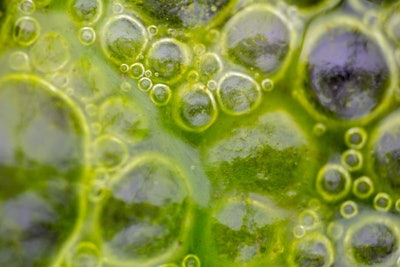
A popular algae oil may have a lower carbon footprint than fish oil, but it could also present other environmental tradeoffs, according to new analysis from University of California, Santa Cruz.
Using the algae Schizochytrium sp., in combination with canola oil, to replace fish oil could reduce the greenhouse gas emissions and biotic resource use associated with feed production, according to the study. However, use of the algae results in higher environmental impacts in all other categories — including water use, land use, and potential nutrient pollution.
“If you replace the fish oil with a blend of algae and canola oil, you’re reducing the burden on the sea, not affecting the marine food webs, but you’re shifting the burden to the land, because you’re replacing fish oil with two ingredients requiring inputs from agriculture on land,” said Anne Kapuscinski, a professor in the environmental studies department at UC Santa Cruz.
Analysis finds algae, canola oil blend has lower carbon footprint than fish oil
A popular algae oil may have a lower carbon footprint than fish oil, but it could also present other environmental tradeoffs, according to new analysis from University of California, Santa Cruz.
Using the algae Schizochytrium sp., in combination with canola oil, to replace fish oil could reduce the greenhouse gas emissions and biotic resource use associated with feed production, according to the study. However, use of the algae results in higher environmental impacts in all other categories — including water use, land use, and potential nutrient pollution.
“If you replace the fish oil with a blend of algae and canola oil, you’re reducing the burden on the sea, not affecting the marine food webs, but you’re shifting the burden to the land, because you’re replacing fish oil with two ingredients requiring inputs from agriculture on land,” said Anne Kapuscinski, a professor in the environmental studies department at UC Santa Cruz.
Kapuscinski said she and her collaborators, including lead author and UC Santa Cruz postdoctoral researcher Brandi McKuin, chose to study Schizochytrium sp. in combination with canola oil because of the blend’s commercial prevalence. It’s technically feasible to use algae oil alone to replace fish oil, she said, but because that is cost prohibitive, algae oil is used in tandem with a lower-cost vegetable oil, including canola oil.
Likewise, Schizochytrium sp. is the most widely available microalgae that produces a key omega-3 fatty acid, DHA, that feed producers typically seek from an algae oil. But unlike other algae that can use photosynthesis to make sugar from light alone, Schizochytrium sp. requires an organic carbon source — typically sugar cane or sugar beets, according to McKuin.
The canola and sugar crops result in a higher use of land-based resources, the researchers said.
However, further advances in technology may help to reduce the various environmental impacts associated with algae oils. Using a different, photosynthetic algae could result in a more favorable environmental outcome, for example.
“There are some other microalgae that do have high levels of DHA, that grow photoautotrophically,” McKuin said. But industry has yet to produce these algae at a scale that is commercially relevant, she said.
Another option in the future, McKuin said, could be using co-products such as sugar cane pulp as the carbon source to produce Schizochytrium sp.
“We did look at some lower-hanging fruit, and that was to look at using glycerol from biodiesel production, a waste byproduct,” she said. “And we did find that when we considered glycerol instead of cane sugar or beet sugar, there was a significant reduction in global warming potential and a 41% reduction in water use.”
Right now, the cost of transporting glycerol or another waste product to wherever the microalgae are produced is too costly. So co-location, McKuin said, would be a critical factor in making these solutions workable.
And there’s always the potential, McKuin said, of a breakthrough in crop production or in other arenas that could result in improved environmental performance for Schizochytrium sp.
“If people can research technologies and develop innovation where the land crops are produced in ways that would have fewer fossil fuel inputs, and also if you could use some other kinds of sugar sources that may be able to be grown in more sustainable ways, you could lower the shifting of the burden,” Kapuscinski said. “Under the current situation, [Schizochytrium sp. algae oil] shifts the burden from sea to land while lowering the carbon footprint and biotic resource depletion.”