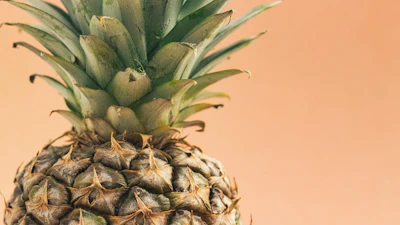
AgroGrIN Tech, a Portuguese start-up, has opened a pilot unit in Pedrouços, in the northern Portuguese municipality of Maia. The unit extracts bromelain from pineapple waste for use in fish feed.
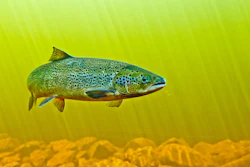
Bromelain is an enzyme found mostly in pineapple peel and core, which are usually thrown away. In aquafeed, it is used to make protein hydrolysates for farmed sea bass and gilthead seabream. Protein hydrolysates are proteins broken down into smaller pieces that fish digest more easily. According to the company, the enzyme improves digestibility, health and growth in these species.
When the process moved from the laboratory to the pilot line, it kept the same ingredient types and extraction yields. Optimizing the line raised projected 2025 production capacity fourfold, from 50 kilograms (110 pounds) to about 200 kilograms of bromelain per year, said Débora Campos, CEO and founder.
The same process also yields pineapple flour. This means nearly all of the by-product is used, in what the company calls a zero-waste model.
Total investment in the unit is expected to reach about €1.2 million by the end of 2026. It combines private capital with funds from Portugal's Recovery and Resilience Plan (PRR). The money paid for the production line, staff and expertise, and the optimization of the bromelain and pineapple flour.
Feed and other applications
"Bromelain has anti-inflammatory and digestive properties that improve nutrient absorption and fish health, with significant benefits for aquaculture," Campos said.
The company also sees possible uses in pharmaceuticals, food and cosmetics because of the enzyme's anti-inflammatory, digestive and antioxidant properties.
AgroGrIN Tech was founded to find a use for pineapple waste that another Portuguese company produced in large quantities every day with no outlet.
Pep4Fish project
The unit was developed under Pep4Fish, a project that turns food industry by-products into protein hydrolysates for sea bass and seabream diets. Its goals are to make fish more resistant to disease and to improve the quality of the final product.
The ETSA Group leads Pep4Fish, which has nine partners: AgroGrIN Tech, B2E – CoLAB for the Blue Bioeconomy, CIIMAR – Interdisciplinary Center for Marine and Environmental Research, ITS – By-product Processing Industry (ETSA), Seaculture (Jerónimo Martins), Savinor and Sorgal (Soja Portugal), Sebol (ETSA) and the School of Biotechnology of the Catholic University of Portugal.
The project is part of the Blue Bioeconomy Pact, one of the PRR's mobilizing agendas for business innovation.
So far, the company has sold only small batches to the food industry for testing and validation. In 2027, AgroGrIN Tech aims to consolidate sales and sign its first supply contracts. It plans to launch an investment round early that year to fund commercialization and international expansion. The company has six employees and intends to add operational and commercial staff over the next year.