As cases of New World screwworm (NWS) mount in the U.S., the Foundation for Food & Agriculture Research (FFAR), Agragene and North Carolina State University are investing $300,000 in a Rapid Outcomes from Agricultural Research (ROAR) grant to suppress the screwworm population by testing new technology that produces sterile, reproductively vigorous male flies.
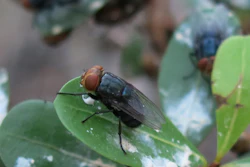
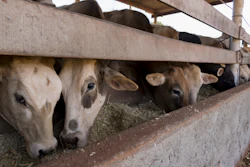
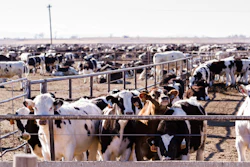
NWS is a fly whose larvae feed on the living tissue of warm-blooded animals, causing severe wounds, weight loss and often death if untreated. A major screwworm outbreak in Texas alone is estimated to cost $1.8 billion in livestock losses, veterinary expenses and labor costs, underscoring the urgent need for new, sustainable control solutions.
Since the 1950s, government agencies in the U.S. and Mexico have managed screwworm fly populations by sterilizing male flies with radiation and releasing them to mate with wild females. As these flies only mate once, the sterile male flies cause the screwworm population to decline and eventually die out. However, studies show that sterilizing flies with radiation can reduce their fitness and mating competitiveness. The sterile flies’ lack of virility requires significantly more sterile males to suppress wild populations, which slows the response to this invasion.
Dr. Maxwell Scott, a professor in the Department of Entomology and Plant Pathology at NC State, previously collaborated on the development of NovoFly, an all-male NWS strain.
“There are major advantages to releasing only sterile males for New World screwworm control, because males are the sex that mate with wild females and drive population suppression,” Scott said. “However, these males must still be sterilized using radiation, which can reduce their ability to mate. In this new project, we are using CRISPR gene-editing technologies to produce males that are already sterile and which may provide a fitness benefit. The goal is to develop an alternative way to produce competitive sterile males without the cost and liabilities of gamma irradiation.”
This research advances a radiation-free sterility approach that could become a critical component of NWS eradication efforts in the U.S., especially when paired with emerging research supported by the U.S. Department of Agriculture (USDA) on male-only strains and additional strategies to enhance male fitness.
FFAR is investing in this research to support USDA’s research priority on protecting the integrity of american agriculture from invasive species. This research aims to provide an alternative technology for producing sterile yet reproductively vigorous male flies.
FFAR’s ROAR program rapidly funds research and outreach in response to emerging or unanticipated threats to the U.S. food supply or agricultural systems.
“The stakes are high and we need to ensure that all possible options for addressing this invasion are on the table,” said Miriam Martin Levalley, scientific program manager. “New World screwworm poses a dire threat to the U.S. livestock industry. Exploring multiple technologies is our best chance of helping producers stay ahead of this costly and destructive pest.”