Feed cost is always high, no matter if cereals and soya are cheap or expensive. This is because when ingredient prices go down, animal product prices also drop. Thus, the drive to keep feed cost down is an ongoing struggle for all animal producers. And, with feed cost, we mean the overall feed bill, not just the cost per kilogram or pound of feed. To this matter, we add feed wastage and feed efficiency, as they both can weigh as much as tag price, or even more. Therefore, the following five measures are offered for consideration in an effort to keep the feed bill as low as possible and margins as high as possible.
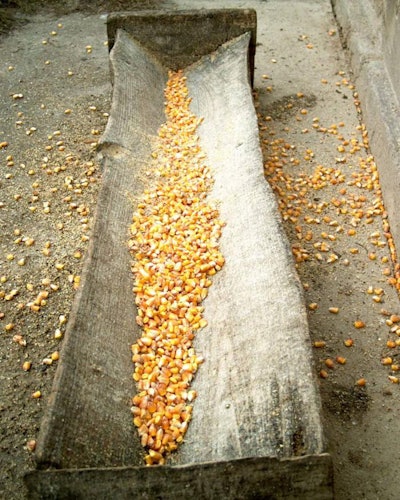
1. Reduce feed wastage. The first step should be to determine how much feed is wasted from the feeders. Anything above 5 percent is considered unacceptable, but there are still many farms where up to 20-30 percent of the feed ends up wasted. To determine wastage, an expert should be invited to walk through the facilities (or digital photographs of the feeders and the surrounding area can be submitted instead). The second step usually involves changes in the feeder flow-gate settings, repairs or even installation of such flow-gates. It is less frequent to recommend complete change of feeders, but when feed is expensive, such option should not be excluded. In my experience, investing in high-end feeders that minimize wastage is a wise move for any new or refurbished facility.
2. Improve feed efficiency. The best way to work around this issue is through genetics, as nutritionists will always design the most efficient program for a given genetic makeup. Investing in breeding females that support improved feed efficiency in their offspring is often at the expense of reproductive performance. Such strategy is also a slow one as it takes time to "recycle" the female population. In contrast, male genetic lines that produce F1 offspring is the surest way to affect feed efficiency rate in a strong and rapid way. Care should be taken not to alter carcass characteristics along with other parameters, as genetic lines are the result of a complex process.
3. Reduce nutrient margins. Most generic diets have been formulated to fit a wide variety of farm conditions. As such, they contain usually generous safety margins for most nutrients, most likely amino acids. A qualified nutritionist can reevaluate these diets and suggest a challenge model where small decreases in nutrient density will be tested against animal performance responses until no further decreases are profitable. Nevertheless, in some cases, even a slight decrease in animal performance might be justified if the reduction in the overall feed bill is substantial. In most cases, however, a slight decrease in the level of the first limiting amino acid (lysine for pigs and methionine for poultry) is a good starting point. In my experience, dropping 0.1 percentage point from lysine and (or) methionine is frequently a favorable exercise in pig and poultry diets, respectively.
4. Reduce the use of additives. It is always a good time to discuss with your nutritionist the need for each additive used in all diets. It is best to start with those additives used for preventing measures, before moving to products that enhance productivity, and finally touching those that resolve farm-specific issues. Each additive remaining in the feed should have a strong and proven record of performance at the farm used and its return-on-investment should be more than substantial. It is quite often the case that a less expensive additive might be recommended, even though it might not be as effective, but such measures might help a farm remain in business.
5. Alternative ingredients. This is an old story, but it pays repeating it. Most diets are based on common cereals such as maize, wheat and soybean meal. Using but a few ingredients has its benefits, but is it always the least expensive option? Quite often, having a look around, many alternative ingredients can be found at very attractive prices. In other cases, investing in importing certain alternative ingredients can be a very profitable business. As most alternative ingredients will have a number of their own problems — most likely in the name of anti-nutritional factors — it is good practice to seek out the advice of a qualified nutritionist before embarking in such practice.
In brief, I have never considered any formula as fixed and any ingredient as given. There is always an alternative option, a less expensive ingredient. And why not; it might pay off to challenge the animals with a less expensive feed. The general advice is to watch total feed cost per kilogram or pound of animal product and not per kilogram or pound of animal feed.