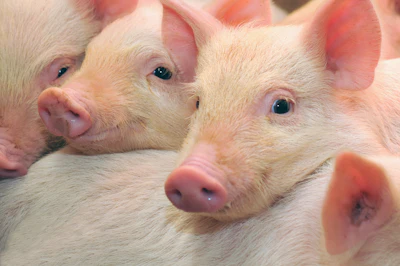
Trypsin inhibitors in soybean products are traditionally discussed as a piglet problem, largely because early soybean processing research focused on swine nutrition. Nursery pigs clearly respond to under-processed soybean meal, and this historical association has shaped industry perception for decades. However, when sensitivity is examined from a physiological and growth perspective, a different ranking emerges. Piglets are highly sensitive, but broiler chicks and pre-weaned calves may be even more vulnerable.
Piglets earned their reputation because the post-weaning period combines dietary change, gut immaturity and high reliance on soybean protein. Under-processed soybean meal can therefore reduce performance quickly. Under practical conditions, pigs can often tolerate trypsin inhibitor levels around 3–4 trypsin inhibitor units (TIU) per milligram without severe growth depression, which is higher than many nutritionists assume. Their digestive system, although immature, still has time to adapt during the nursery period.