There is considerable confusion around the use of choline in poultry diets. Some formulators add choline in all diets, whereas others use it more selectively. To make things worse, some diets include choline as part of their vitamin premix, while in other formulas, choline is added as an add-on ingredient. This article will answer five very important questions about choline.
The confusion around choline begins with the fact that choline is not a required vitamin in pigs, but it is indeed essential for poultry. Whereas pigs can synthesize enough choline to meet their basic needs, poultry cannot synthesize this vitamin due to an evolution deficiency. Thus, birds should receive enough choline from their feed to meet their total requirements for this vitamin. Whether this supply originates from choline supplements or choline found in ingredients like cereals and soybeans, this is not relevant as far as the bird’s organism is concerned.
Broilers require at least 1,200 mg/kg choline in their feeds, whereas growth performance continues to increase up to about 2,000 mg/kg, albeit at much reduced rates. On the other hand, layers require about 110 mg/day, which is approximately 1,100 mg/kg feed. Brown layers require slightly more than white layers as they tend to produce larger eggs -- and choline is an integral part of egg yolk. The above levels correspond to total choline levels and do not take into account the choline sparing effects of other methyl donors, such as betaine and methionine.
There is considerable confusion around the use of choline in poultry diets. Some formulators add choline in all diets, whereas others use it more selectively. To make things worse, some diets include choline as part of their vitamin premix, while in other formulas, choline is added as an add-on ingredient. This article will answer five very important questions about choline.
1. Is choline a vitamin or not?
The confusion around choline begins with the fact that choline is not a required vitamin in pigs, but it is indeed essential for poultry. Whereas pigs can synthesize enough choline to meet their basic needs, poultry cannot synthesize this vitamin due to an evolution deficiency. Thus, birds should receive enough choline from their feed to meet their total requirements for this vitamin. Whether this supply originates from choline supplements or choline found in ingredients like cereals and soybeans, this is not relevant as far as the bird’s organism is concerned.
2. How much choline is required?
Broilers require at least 1,200 mg/kg choline in their feeds, whereas growth performance continues to increase up to about 2,000 mg/kg, albeit at much reduced rates. On the other hand, layers require about 110 mg/day, which is approximately 1,100 mg/kg feed. Brown layers require slightly more than white layers as they tend to produce larger eggs -- and choline is an integral part of egg yolk. The above levels correspond to total choline levels and do not take into account the choline sparing effects of other methyl donors, such as betaine and methionine.
3. Why choline is hardly needed in wheat-based diets?
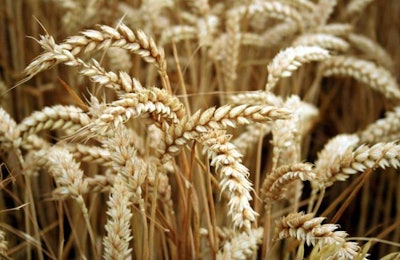
Maize and soybean meal contain 620 and 2,794 mg/kg choline, respectively. In contrast, wheat contains 1,092 mg/kg choline. A typical diet based on corn and soybean meal (65 percent maize, 25 percent soybean meal, 10 percent other) will contain at least 1,040 mg/kg choline from natural sources. The same diet based on wheat and soybean meal will contain at least 1,408 mg/kg. Here, it is evident that most typical corn-based diets require choline supplementation, whereas wheat-based diets hardly warrant it. For broilers, it would appear that choline supplementation is essential only with corn-based diets, whereas layers hardly require any supplementation with either cereal source. If we take into account the high levels of betaine in wheat, then this further proves the futility of adding choline to layer diets. If maize by-products are used as a protein source (dried distiller’s grains or maize gluten) then choline supplementation needs increase as soybean meal concentration decreases.
4. Can betaine or methionine replace choline?
Methionine is a methyl donor, like choline and betaine. But, using methionine to spare choline is an expensive proposition. In contrast, betaine might be a less costly alternative, with 1 gram of betaine being able to spare 1.57 grams of choline chloride. The reason why betaine can spare choline is because during metabolism choline is converted to betaine. Betaine cannot be converted back to choline, but it can be reduced to methionine. This also explains why methionine is not a good alternative to choline: it yields one third of methyl groups compared to choline.
5. What is the practical approach to choline supplementation?
There are two approaches when it comes to deciding how to tackle the issue of choline supplementation. The first is to use a high level of choline supplementation in all diets, say adding 1,000 mg/kg in all broiler diets, and 500 mg/kg in all layer diets. This approach disregards any fluctuation in natural levels of choline either within or among cereal sources, and may also be warranted in case of using high levels of maize by-products. It is a one-size fits all approach that provides ease of mind, but at considerable expense (choline chloride is an expensive ingredient). The second approach is that of introducing choline as a nutrient that needs to be balanced on and monitored during formulation, taking into account the exact contributions of choline from natural ingredients. To this end, choline chloride is handled as an independent nutrient and as such it is not part of the vitamin premix. Thus, some formulas will require less or none choline compared with others.
Choline is not a mystery, but considerable confusion arises when it comes to feed formulation for poultry. The questions above provide an insight why choline is essential for poultry, how much it is needed, why some diets require more choline than others, and finally, how to handle choline supplementation in practice. At the end of the day, choline is another nutrient with that requires special attention, and that only if least-cost feed formulation is the desired outcome.