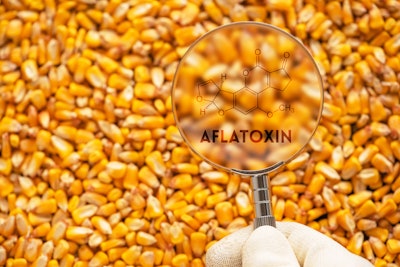
Among the many challenges in piglet nutrition, few are as insidious and persistent as aflatoxins. Aflatoxins – produced primarily by Aspergillus flavus – are invisible, tasteless and highly toxic, especially to young pigs. Even trace levels in feed can have serious consequences for piglet health, performance and survivability (the EU and U.S. limits are 5 and 20 ppb, respectively).
In piglets, aflatoxins primarily affect the liver and immune system. Symptoms often begin subtly: reduced growth, poor feed intake, lethargy and increased susceptibility to secondary infections. In severe cases, jaundice, bloody diarrhea and sudden mortality may occur. The problem is that these symptoms are non-specific and often mistaken for bacterial or viral infections, delaying proper diagnosis. Normal diarrhea is not a symptom of aflatoxicosis.