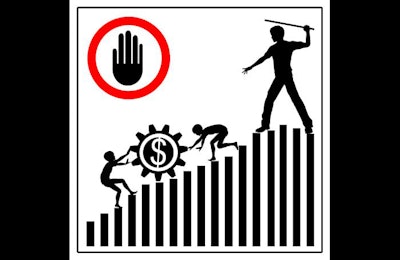
A team of scientists and human rights advocates developed Labor Safe Screen, a method for determining if pet food ingredient supply chains involve slavery, sex trafficking, forced labor and other unethical activities. The team used a five-point method to search for abuses in the seafood industry. However, the system would work for other types of human and pet food, as well as sustainability and environmental concerns.
“It's a workable approach to learning about conditions of production around any parameters you can learn about by talking to people,” Katrina Nakamura, PhD, founder of the Sustainability Initiative, told Petfood Industry.
“It's not enough to have a blanket commitment to no forced labor at HQ level however, because this problem exists precisely because of lack of oversight at the base of the supply chain,” she said. “It comingles with the profits that derive from being able to cheaply source untraceable raw materials. The risks to business of ties to slavery and illegal fishing in their goods is the flipside of the profit margin many have enjoyed by sourcing supplies with no accountability to frontline conditions for people and the environment.”
In July, a panel of judges dismissed class action lawsuits against pet food companies over alleged use of fish caught by forced laborers involved in the Thai seafood industry. The lawsuits against Nestle Purina, Mars Petcare and Big Heart Pet Brands (J.M. Smucker) arose after reports by the Associated Press and New York Times documented the lives of Southeast Asian men enslaved on Thai fishing vessels.
To avoid such problems, she advised pet food companies to map their supply chains.
“Actually in pet food, some of the biggest operators do this down to the plant level but then have a hard time with tracking out all inputs to the plant in some countries like Thailand, a hub country for seafood that imports raw materials from multiple origins.”
Beyond human rights, method could work for sustainability and conservation issues. For example, the method could help verify that palm oil came from sources that did not threaten the survival of orangutans.
“In the same way as for working conditions in seafood, we'd map the supply chain, obtain supplier data, and talk to local/regional groups in the example you describe,” she said.
Science Advances published the details of the framework in “Seeing slavery in seafood supply chains.”
Five-point framework for supply chain analysis
Nakamura and her team designed a five-point framework, which they dubbed the Labor Safe Screen. They tested the framework with 118 seafood products, such as farmed shrimp and Pacific tuna. Eighteen food companies participated in the analysis, including some pet food companies, although the companies remained anonymous.
Within the five-point framework, four aspects identified risks. First, product screening determined a foods’ country of origin and that nation’s standing on forced labor in seafood. Then, a template mapped the supply chain. Third, the team used an algorithm to estimate risk in fishing operations within that supply chain. Fourth, workers and others were surveyed to collect proof of protective conditions in the workplace.
The final component put the previous steps into context and provided guidance for correcting negative findings. This fifth component was a set of principles establishing minimum protective workplace conditions, accompanied by templates for a code of conduct, universal contract, grievance mechanism and disclosure of efforts.
Monitoring labor abuses in the pet food supply chain
As major buyers of raw ingredients worldwide, pet food companies have the power to advocate for the human rights in the work place. The Labor Safe Screen may serve as a plug-and-play means to do so.
“The object is to improve conditions where needed most,” Nakamura said. “This reduces risks to people and risks to business. However, as we learned to listen to workers and hear what they want, the basis of our approach to screening shifted away from proving or disproving specific cases of forced labor in favor of establishing system fundamentals for human rights due diligence.
“That means the buyer with the leverage at the market end of the chain can ask suppliers to build social accountability by taking protective steps,” she said. “They can ask all their suppliers to take the same step, like independently disclosing their specific efforts to protect workers in their facilities from forced labor, or they can ask some suppliers to take a series of progressive steps to build proof of protections.”
All pet food ingredient suppliers should be required to prove their efforts independently, as part of the contract with dog, cat and other pet food companies, she said.
At the individual level, all workers should have actionable contracts that aren’t written to disadvantage the worker.
“For migrant workers, the contract terms should match between what they signed onto before leaving home and the reality in the workplace,” she said. “There are some big commitments companies can make like to the Employer Pays principle, where they ensure the brokers they use are not charging workers ongoing fees.”
“Workers in facilities or on boats or farms are still members of families and communities and have ties to local/organizations which companies can approach for information on ‘true’ conditions for their workforce,” she said. “Companies can establish relationships with local/regional labor rights or migrant rights organizations. This is the most effective and economical approach we've witnessed.”
All that can sound like a lot for a pet food company to handle, especially smaller companies. That’s where the Labor Safe Screen system can help.
“In terms of Labor Safe Screen, we provide an automated approach companies can use to screen hundreds of products in near real time,” Nakamura said. “We then provide support to suppliers operating where high risks are identified. We'll take that support down to the facility level and to remediation wherever needed.”