Entosystem's ENVOL project has obtained independent verification of its greenhouse gas emission reductions and is now eligible to generate and commercialize certified carbon credits, confirming that its insect farming business model produces real, measurable climate benefits while converting food waste into sustainable protein ingredients.
- Entosystem's facility in Quebec processes up to 90,000 metric tons of food residues annually and avoids more than 23,000 metric tons of CO₂ equivalent emissions per year
- The project received independent third-party verification in accordance with ISO 14064-3 standards and is registered with CSA Group's EcoProjects GHG Registry
- The company transforms food waste into high-nutritional-value ingredients for pet food, including proteins and oils, plus frass for regenerative agriculture
- Entosystem's integrated industrial process combines material separation, bioconversion, black soldier fly rearing, and product processing into a complete value chain solution
- The verified carbon credits represent important recognition of the circular economy model's potential for scaling across multiple industries including aquaculture feed
Entosystem’s ENVOL project has obtained independent verification of its greenhouse gas emission reductions and is eligible for the generation and commercialization of certified carbon credits issued by the CSA Group’s EcoProjects Registry.
This recognition confirms that Entosystem does more than produce a sustainable protein: its business model generates real, measurable and verified climate benefits. Located in Drummondville, Quebec, Canada, Entosystem’s facility has an annual capacity of up to 90,000 metric tons of food residues. At full capacity, the project is expected to avoid more than 23,000 metric tons of CO₂ equivalent emissions per year.
The project was verified by an independent third party in accordance with the requirements of ISO 14064-3 and is now registered with the CSA Group’s EcoProjects GHG Registry.
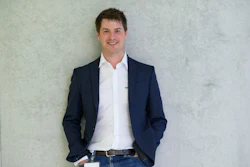
“When we founded Entosystem, our objective was to develop an innovative insect-farming solution to divert significant volumes of food residues from landfill and transform them into useful products. Being able today to quantify and have the emission reductions generated by our model independently recognized is a very important milestone and a source of pride for all our employees,” said Cédric Provost, president and co-founder of Entosystem.
A technology developed to valorize complex materials
Although the black soldier fly is at the heart of Entosystem’s biological process, its technology goes far beyond insect farming. Over nearly a decade of research, development and scale-up, Entosystem has developed an integrated industrial process capable of handling complex and variable pre-consumer food residues. This innovation combines, among other things, technologies for separating and preparing materials, formulating them for bioconversion, rearing black soldier flies and processing them into finished products.
Mastery of the entire value chain makes it possible to convert materials that would otherwise be destined for landfill into high-nutritional-value ingredients for pet food — proteins and oils — as well as frass, a biostimulant intended notably for regenerative agriculture. This technology platform also opens the door to other markets, including aquaculture feed.
Entosystem’s innovative approach combines the valorization of residual materials with the commercial production of ingredients that meet the high quality and food safety requirements of the markets it serves. Its facility has an annual capacity of up to 90,000 metric tons of food residues, enabling this process to be operated at industrial scale.
An industrial model with strong deployment potential
For Sanimax, Entosystem’s majority investor, this certification represents important recognition of the potential of the model developed by the company.
“At Sanimax, we believe we must always find new ways to give organic materials a second life. That is precisely what attracted us to Entosystem from the outset,” said Martial Hamel, president and CEO, Sanimax. “Seeing its impact now recognized through independent certification marks an important milestone. This recognition demonstrates that it is possible to transform food residues that would otherwise have been lost into useful resources. This is exactly the kind of innovation we need to advance the circular economy.”