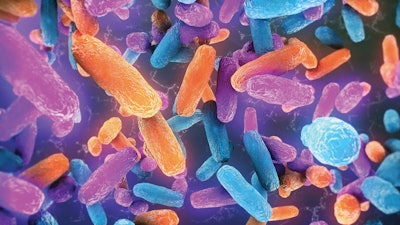
Understanding the gut microbiome could improve poultry health

Researchers are still learning how to manage this organ to optimize bird performance and welfare.

Doughman Headshot3 Headshot
The poultry microbiome is comprised of all the bacteria, archaea, viruses and eukaryotes found in the body, but the term can also be used in a more specialized way, such as the skin microbiome, reproductive microbiome or the gut microbiome.
nopparit | iStock.com
Subscribe to Magazine

Managing the poultry microbiome correctly through nutrition could have a positive effect on the health and welfare of flocks.

The microbiome is a living dynamic environment made up of microbes and other microorganisms. The poultry microbiome is comprised of all the bacteria, archaea, viruses and eukaryotes found in the body, but the term can also be used in a more specialized way, such as the skin microbiome, reproductive microbiome or the gut microbiome. Most research today for production animals, like poultry, is focused on the gut microbiome.

“Our knowledge on the poultry microbiome and microbiota has increased over the last 10 years, but there is still a lot to learn,” explained Theresia Lavergne, Ph.D., senior technical service manager, Natural Biologics. “We’ve learned a lot if you think about it in the whole big scheme of things, but we do not know everything.”

Theresia LavergneTheresia LavergneNatural Biologics

The makeup of microbes and microorganisms in a microbiome fluctuates constantly and is dependent upon a variety of factors, including the age of the animal, what it eats, if it is given antibiotics, where it lives and more. In addition, there are differences between the turkey and the broiler microbiome.

“We cannot just look at the microbiome of one flock of broilers and expect that to be the microbiome of all broilers,” said Lavergne

A relatively new idea with important implications for poultry health

The microbiome is a relatively new concept. It was first recognized in the 1990s, when it was described by researchers as a new organ.

One of the reasons that the microbiome was only recently recognized is because of the difficulty in culturing the bacteria within the microbiome. The emergence of genome sequencing and other technologies changed that.

“We do know that the microbiome does have a huge impact on health – not just when we’re talking about poultry or animals – but also human health,” Lavergne said.

“The microbiome impacts gut health since it is involved in interactions such as structural integrity of the gut, balancing the microbiome more towards good or beneficial bacteria versus bad and it can also affect the immune system or immune status of the host. When we have a good healthy gut microbiome, we can expect a more optimum growth performance.”

In just the short time since the gut microbiome was first described, researchers have linked it to a variety of poultry diseases. For example, an Iowa State University study revealed that a treatment approach that exploits a common interaction between the chicken gut microbiome, nervous and immune systems could help to eradicate Salmonella and other harmful bacteria. The drug, Reserpine, is already used in human medicine to reduce blood pressure. The study showed that it was effective against Salmonella in chicken cells and organs in the lab, as well as live birds.

In just the short time since the gut microbiome was first described, researchers have linked it to a variety of poultry diseases.In just the short time since the gut microbiome was first described, researchers have linked it to a variety of poultry diseases.KANIN.studio | adobestock

Managing the poultry microbiome through feed

Diet and feed additives are an important way that poultry producers can positively influence the gut microbiome.

“Things that support the early development of a good microbiome, a diverse stable microbiome, or affect that homeostasis can be disrupted by any of the many stressors that, due to the nature of production, are often present in production on the farm, i.e., feed changes, vaccinations, high temperatures, accidental feed withdrawal periods, etc.,” Twan van Gerwe, technical director, EW Nutrition, said.

“There are many small challenges that can have a short-lived impact on the microbiome and its composition, but if the microbiome is resilient enough, it should be able to bounce back within a few days to restore itself to a stable composition and move on.”

Twan van GerweTwan van GerweEW Nutrition

Prebiotics, postbiotics, probiotics, phytobiotics, bacteriophages, enzymes and other feed additives can help encourage the growth of good microbes and microorganisms to improve poultry health and performance.

“In contrast, antibiotics, ionophores and subsets of probiotics and postbiotics can directly suppress the growth of certain members of microbial community. Both categories of feed additives may also indirectly reduce the abundance of harmful bacteria and opportunistic microorganisms, ultimately helping to maintain a healthy gut microbiome that supports production performance especially under challenging conditions,” explained Vivek Kuttappan, Ph.D., poultry technology lead, Cargill.

Vivek KuttappanVivek KuttappanCargill

"Essential oils are another category of feed additives that support gut health and microbiome modulation. Essential oils are shown to reduce oxidative stress and inflammation, supporting the overall health of the animal," Gabriela Cardoso, Ph.D., NOVUS poultry solutions manager for the Americas, stated.

One of the major impacts of discussion about the microbiome is a renewed focus on fiber’s role in broiler feed formulation.

Gabriela CardosaGabriela CardosaNOVUS

“What we’ve been seeing in more recent research is that fiber has a big and direct impact into the behavior of microbial populations in regard to the microbiome and that might lead to health and performance benefits,” explained Tiago Tedeschi dos Santos, global technical director, AB Vista.

There is still some debate about how much fiber is optimal for the poultry microbiome. However, when adding fiber to poultry diets, producers should be careful that they do not just dilute the minerals, amino acids and energy the birds are already receiving.

Tiago Tedeschi dos SantosTiago Tedeschi dos SantosAB Vista

“The idea is to measure and evaluate that the microbiome has balance. How do you balance improving that lower gut fermentation without diluting the diet and without impacting the performance because of the other nutrients that you are adding to the feed,” Tedeschi dos Santos added.

The world has learned a lot about the microbiome in the past 30 years, and the development of even newer technology that harnesses the power of artificial intelligence (AI) could provide further illumination into the mysterious workings of the poultry microbiome.

“We need to be more nurturing of the microbiome in identifying the functions and the species that are not helpful and modulating those much more carefully than in the past,” said Aaron Cowieson, senior science fellow at dms-firmenich. “That’s going to require a combination of analytics tools and bioanalytical algorithms, as well as the availability of more precise modulatory technologies.”

Aaron CowiesonAaron Cowiesondsm-firmenich Animal Nutrition & Health

Subscribe to Magazine
Page 1 of 16
Next Page