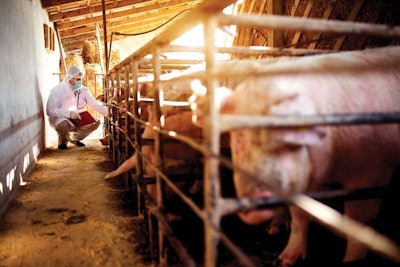
dusanpetkovic | iStock.com
Early detection plays a key role in containing the spread of fatal animal diseases such as African swine fever (ASF) or highly pathogenic avian influenza (HPAI), but countries around the world vary widely in how effectively they notify farmers of outbreaks, according to new research published in the journal Nature Communications.
The study used data from the World Organization for Animal Health (WOAH) to build a model that evaluates the performance of farm-level outbreak surveillance and notification programs, based on the assumption that a lower number of animal fatalities relative to farm size pointed to more effective programs. They then used these parameters to compare the surveillance performance of WOAH-member countries.