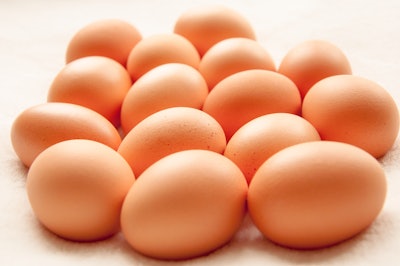
Decades of intensive genetic selection in commercial layers has resulted in earlier maturation, while sustaining high lay performance in extended production cycles until 100 weeks of age, in order to make egg production more sustainable. However, intensive egg production challenges hen health and, particularly, skeletal integrity. Eggshell formation requires mobilizing large amounts of calcium, coming in part from the diet and from bone, which could induce skeletal problems such as osteoporosis and bone fractures. Also, eggs with poorer quality eggshell with cracks or defects are more frequently laid by older hens. These eggs need to be downgraded, causing important economic losses.
Poor eggshell quality is a major concern for food safety, as eggs with a damaged eggshell are more easily contaminated with bacteria, e.g. Salmonella. What can we do to deal with these problems? Adequate nutrition and management can help achieve the genetic potential of modern layers while maintaining eggshell quality and skeletal integrity, as well as the overall hen health during the extended production cycles.